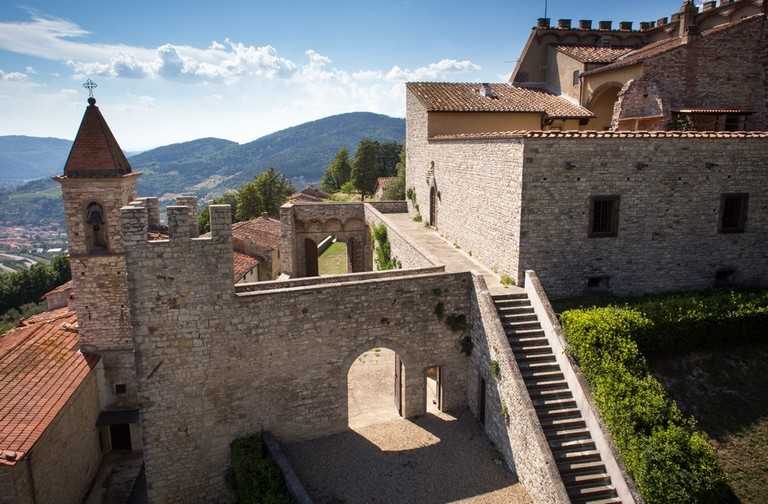
Tuscany is considered the Bordeaux of Italian wine. A land of wine in the heart of Italy, in every sense of the word. It is the lifeblood of pastoral Italy, the concentrated beauty of Italian culture, a celebrated collection of medieval architecture alongside stone houses with red roofs. A region steeped in a rich and diverse history, where millions of tourists continuously tread the dusty paths of its glorious past. Just mentioning the cities of Florence, Siena, and Pisa, the enchanting town of San Gimignano with its 14 ancient towers, and the famous wine town of Montalcino, is enough to evoke a smile of nostalgia for the beauty and flavors of Tuscany.
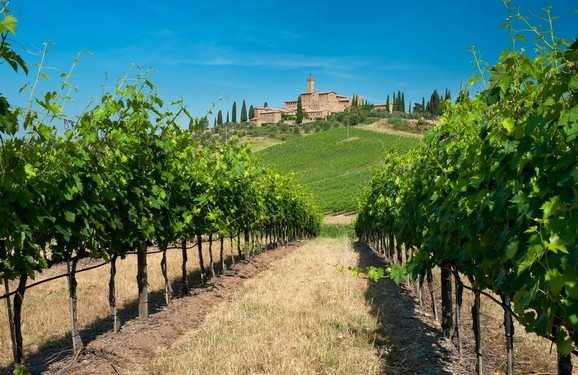
The Tuscan landscape caresses the curious eye across its rolling and winding terrain, green hills and valleys, vineyards that fill the view, the green with red-roofed patches on the horizon, the walls that have stood for thousands of years as a reminder of days gone by. It is both an agricultural and pastoral scene, a wine region where about four million inhabitants live, almost all of whom are somehow connected to wine—whether as vine growers, winemakers, marketers, or even cooks following Tuscan recipes. An ancient tradition, thousands of years deep-rooted among the picturesque villages and stone buildings, between the churches and spires that rise skyward, between the rural culture and modern progress, which remains inconspicuous. The modernization of the wine industry is enclosed within the walls of the old wineries, preserving the splendor of the ancient tradition.
This translation seeks to maintain the poetic and evocative tone of the original Hebrew text, conveying the deep connection between Tuscany, its history, culture, and its renowned wine-making tradition.
After years of Chianti dominating the scene, Tuscany has emerged as the region reinventing Italian wine. The fine wine, the innovative Sangiovese. The heart of this transformation occurred between the hills of Florence and Siena, among the endless vineyards interwoven with olive trees and aging stone houses. A revival. A renaissance.
The resurgence of Tuscan wines came as an existential necessity, a fundamental need to break away from the beloved, traditional Chianti and begin producing from those same grapes, fine wines that would earn global acclaim. It was no simple revolution—moving from the round bottle wrapped in a straw basket to a wine that redefined Italy as a major wine power, with esteemed local and international ratings. This didn’t happen overnight; it was a decades-long, ongoing process. In this way, Tuscany earned official recognition for the quality of its wines, a recognition reflected in very high ratings. Eleven wineries were awarded the DOCG rating (Denominazione di Origine Controllata e Garantita, which translates loosely from Italian as ‘Controlled and Guaranteed Designation of Origin’), the highest rating, while 41 wineries hold the second most important rating—DOC (Denominazione di Origine Controllata—’Controlled Designation of Origin’).

The Super Tuscan Revolution
The process that began by breaking the stagnation of Chianti led to a true revolution—shattering the old Tuscan ethos and breaking conventions. This was a revolution that brought significant changes in vine cultivation and wine production, while simultaneously refreshing the image of Tuscan wines. New winemakers, including some from France, descended upon the old local wineries with new formulas for producing wines of the New World—not the American New World, but a European-Italian New World of Tuscany. New grape varieties, previously foreign to the region—Cabernet Sauvignon, Merlot, Pinot Noir, and others—were introduced and became part of the new wines known as Super Tuscans, an unofficial yet well-known and recognized category for anyone familiar with the wine world. These new wines do not necessarily adhere to the region’s common grape variety. They are excellent wines, sometimes with the addition of the local variety, Sangiovese. Tuscan wines like Ornellaia, Sassicaia, Tignanello, and others, from various blends, crafted by foreign winemakers, have shattered the ceiling of the premium wine market.
The official local regulations distinguish between Sangiovese-based wines and Super Tuscans, which have their own governmental rating, IGT (Indicazione Geografica Tipica), serving as a sort of “authenticity certification.” The revolutionary wines are entirely different from the local Chianti, which is based on Sangiovese grapes, while the Super Tuscans are blends of Cabernet Sauvignon, Merlot, Pinot Noir, and other varieties according to the winemaker’s preference.”
This translation captures the essence of the Super Tuscan revolution, emphasizing the break from tradition, the introduction of new grape varieties, and the creation of a new category of wines that transformed Tuscany’s place in the global wine market.
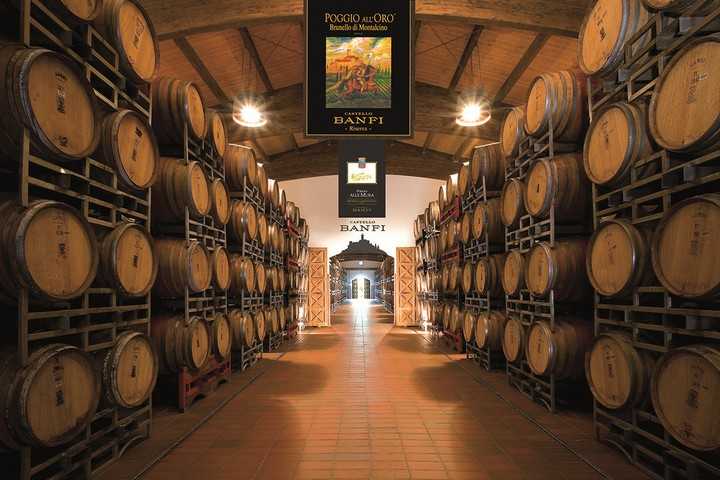
Wines for Connoisseurs
In my frequent tours along the paths of Tuscany and during numerous tastings, I discovered that the locals, true connoisseurs, happily sip both old and new wines—local wines that are often unfamiliar to outsiders. These wines cater to every budget and palate, with less publicity but a great deal of soul and local pride. Most are predominantly made from the Sangiovese grape, with a small addition of other local varieties. Here are three outstanding wines from long-established wineries that represent the post-revolution Tuscany well.
FRESCOBALDI Nipozzano Vechie Viti 2016 – DOCG
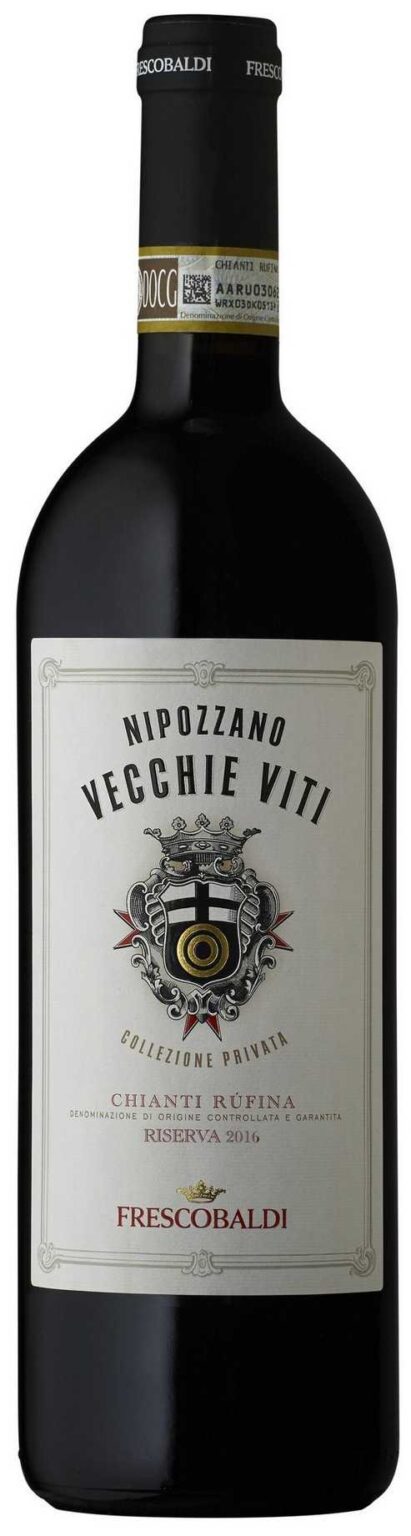
A blend of Malvasia Nera, Colorino, Canaiolo, and Sangiovese grapes, aged for 24 months. This wine represents the best of Tuscan vineyards, with an emphasis on mature to old vines. The winery has been well-preserved since its founding by Frescobaldi in 1603, housed in an ancient stone building with concrete vats and oak barrels. The wine is a brilliant Bordeaux color, full-bodied with a strong presence, exuding aromas of purple flower petals. It’s spiced, with notes of black strawberries and toasted wood in the background. A wine with a promising future.
CASTELLO BANFI Excelsus 2015 – IGT
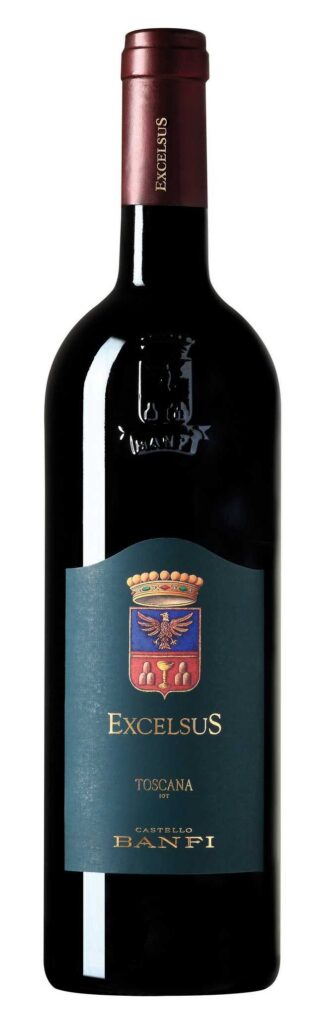
Part of the Super Tuscan wine group, Excelsus lives up to its name, meaning “excellent” in Latin. It’s a successful blend of two well-matched varieties—Cabernet Sauvignon and Merlot—that were fermented separately and only combined after the second fermentation. The wine spent 24 months in French oak barrels and an additional six months in bottles at the winery, without filtration. This is a well-defined wine with a deep Bordeaux color. It is balanced, full of ripe red fruit, cherries, and cassis. The Banfi estate is located in the southern part of Tuscany, surrounded by gentle hills, villages, and ancient buildings.
SALCHETO Riserva 2015 – DOCG
Made from Prugnolo Gentile Sangiovese grapes (with an additional 5% Colorino), this wine aged for two years in barrels. The organic and biodynamic vineyard estate in the Montepulciano area faithfully adheres to local regulations. With all the certifications for environmental preservation, the estate produces wines using traditional methods with modern equipment. The yield is limited, with hand-harvested grapes, fermentation in large oak barrels, and two years of aging for the young wine, without any chemical additives. This wine will remain excellent even in 2030.
A Memory to Conclude
I walked with curiosity and admiration through the streets of two towns that adorn the map of Tuscan, and indeed Italian, wine. The first, Montalcino, is a small and modest town surrounded by an ancient wall, with a central square—Piazza Grande—and a clock that, in its better days, also told the time. Perched on a hill, it has narrow streets, dusty stone, and red roofs. The surrounding vineyards uphold tradition by growing Sangiovese grapes, the foundation of all the town’s wines. The Brunello di Montalcino DOCG is the town’s vinous signature.
The second town, Montepulciano, is larger. A city from the Middle Ages and the Renaissance, it too sits on a similar hill. Only 35 kilometers separate the two towns, yet their wines are distinct. The city’s well-known wine, Vino Nobile di Montepulciano DOCG, is composed of Prugnolo Gentile grapes—a variant of Sangiovese, along with other varieties like Merlot, Canaiolo, and Colorino Nero. This wine is rounder, easier to connect with, and more versatile in its food pairings.
An old saying by the 17th-century Italian diplomat and poet Fulvio Testi referred to Chianti, but it can certainly apply to all of today’s Tuscan wines: “The Chianti of Florence kisses you, bites you, and brings sweet tears to your eyes.”