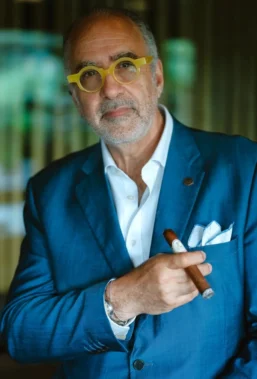
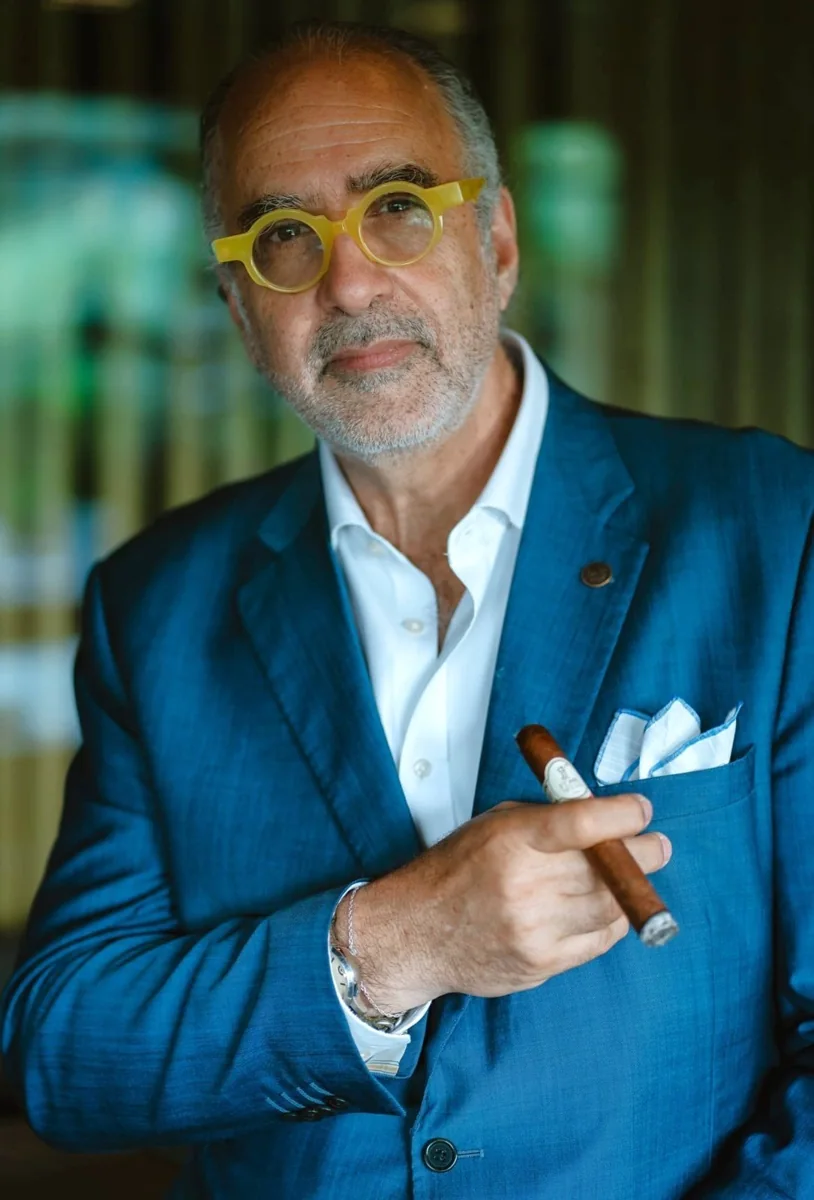
Between workshops at the latest Whisky Live exhibition in Tel Aviv, I caught up with Filippo Costi, Chief Commercial Officer of the Honduran cigar company Maya Selva Cigars, which bears the name of the woman who founded it and continues to steer it today. “Caught up with” is probably the right expression. Although his workshops were allotted an hour on the schedule, for Costi time is mostly a suggestion: he continues explaining, answering, elaborating and returning to the details as long as someone in front of him wants to listen. And the audience certainly stayed.
Within the first few minutes of our conversation, it became clear that he is difficult to fit into a single category. His path into the cigar world was unusual, and the way he thinks about the field is also quite different from the norm. He combines curiosity, precision, an aesthetic sensibility and a tendency to break every subject down into its components, then rebuild it in his own way. His connection to Israel is familiar territory too: Costi, 65, is Jewish, and he would even open his talks in Israel with a few sentences in Hebrew. It made our conversation warm and engaging.
What do you think Maya Selva saw in you when she decided, in 2019, to create a role for you that had never existed in the company?
“Maya always had a very clear picture of where she wanted to take the company and the stages she needed to go through along the way. When she approached me, she knew I brought extensive international experience, but we also had a deep personal foundation. We have been friends for decades. She was at my wedding, I was at hers, and in fact the first time I went to Honduras was for her wedding to Philippe, at a time when getting there was a journey in itself.
“For 15 years I lived in Panama and worked in the distribution of luxury goods, watches and jewelry across Latin America, from Mexico to Chile and Argentina. So Maya knew very well how I worked and knew she could count on me. I was actually the one who was not convinced. I loved cigars, but I did not really know the industry behind them. I asked her why she would not choose someone who was already in the business, and she simply replied that she did not want to take someone from another company.”
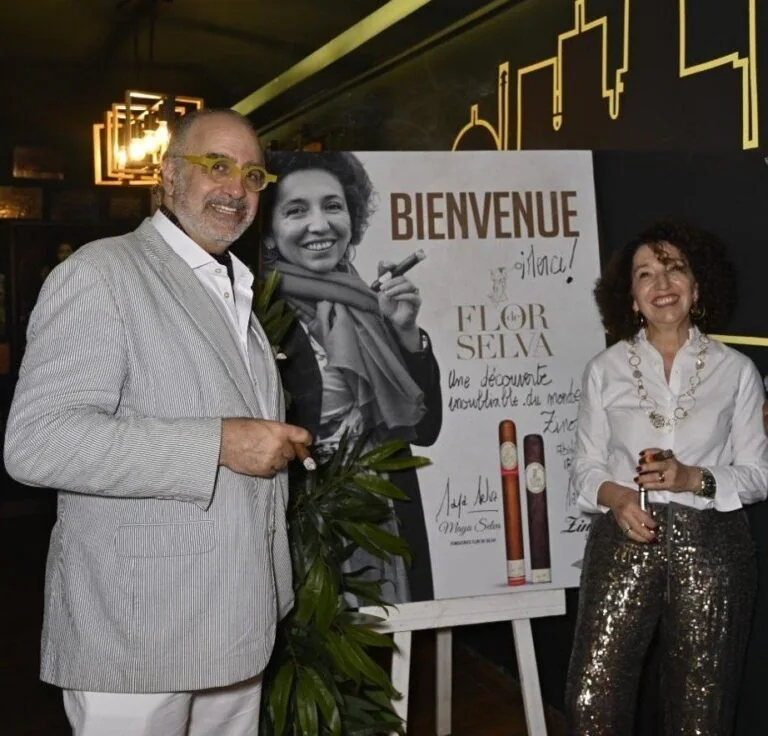
You have a doctorate in architecture. To what extent does that training still inform your work with cigars?
“Very much. I had an influential teacher who taught me that an architect needs to know how to tackle completely different projects, from designing a spoon to an apartment, a building or an entire city. So you have to be versatile, but above all you need to develop a project methodology, a way of thinking that can be adapted to any situation. That approach has accompanied me throughout my career, from technological and international projects to 15 years in the world of watches and jewelry. Architectural methodology helped me enter a new world each time and understand how to approach it. There is also the aesthetic side. I grew up in Italy, so what I developed was not so much a sense of beauty as a sense of harmony.
“To this day, I have a Maya Selva notebook in which I sketch ideas [he takes it out and shows it to me — K.M.]. Whenever we go into a meeting and I open it, everyone is already worried about what crazy idea I am going to come up with this time.”
What did you bring from the world of watches and jewelry into the cigar world?
“Above all, the importance of integrity in a product. That is true of a watch, a piece of jewelry, a car, a house and a cigar. A product has to live up to what it promises. You can mislead a customer once, but you cannot build a lasting relationship that way. When I was young, my father told me that whatever you do, even if you are unloading watermelons at the market, do the job in such a way that the next morning you can look at yourself in the mirror while you shave. That sentence has stayed with me. For me, professionalism begins exactly there: with taking responsibility for what you do and being able to stand behind the result.”
You knew and loved cigars before entering the industry. What did you have to unlearn or learn again?
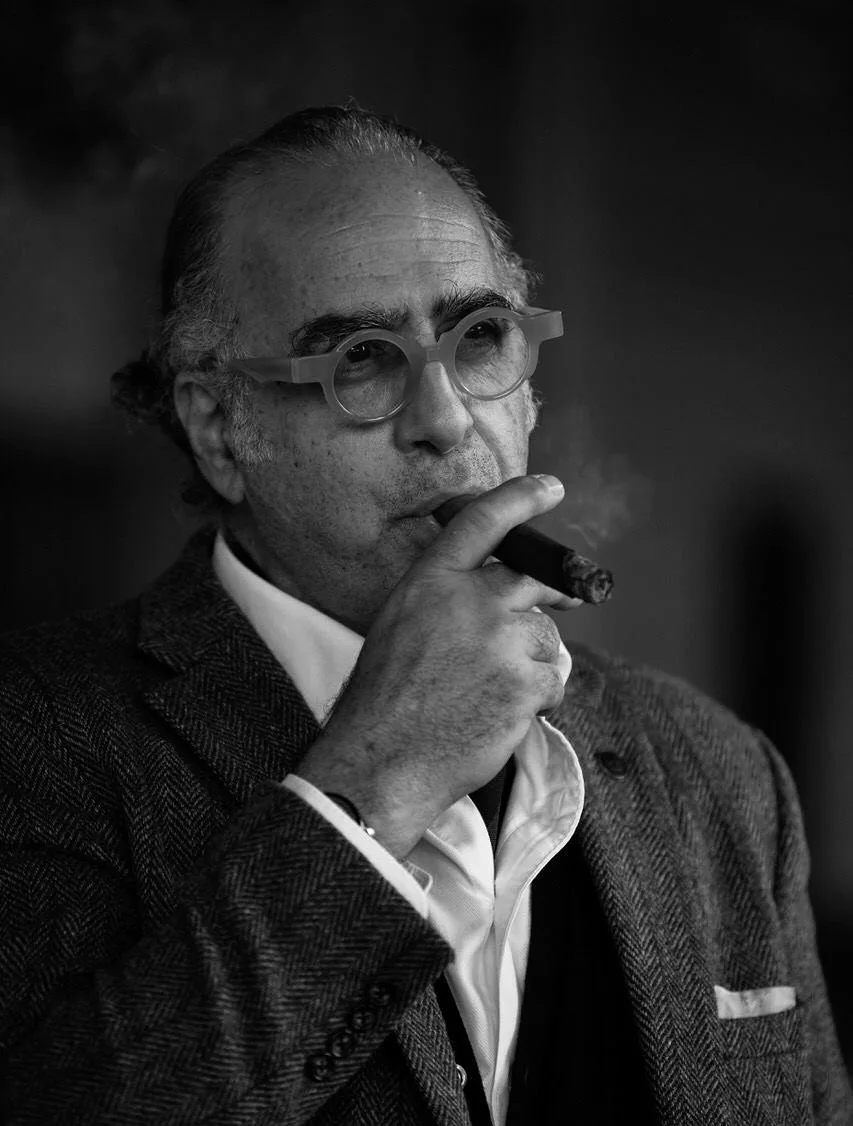
“The first thing was to stop looking at the price to decide which cigar to buy. Before I entered the field, I did not know enough about what lay behind it, so I often chose according to the box, the band or the price, a little like choosing a bottle of wine. I have lived in Italy, New York, Madrid, Venezuela, Panama, Paris and Argentina, and along the way I learned to appreciate wine without being an expert. With cigars, I had to learn not to let the packaging or the price make the decision for me. Today, when I open a box of cigars, I can understand a great deal from the way they are arranged, their uniformity and their construction. I do not even need to smell them to begin reading them.
“There is a lot of information there if you know where to look. It brings me back to Le Corbusier’s idea [the French architect and designer, one of the most influential of the 20th century — K.M.] about the difference between looking and seeing. We all look, but we do not all really see.”
In your view, what makes a cigar truly complex and good, and which of your lines expresses that best?
“To my mind, the idea that a cigar has to change between the first, second and final thirds has sometimes created confusion between complexity and change. If I enjoyed the beginning but the end less so, for me that is not a complete experience. A good cigar has to be built on quality tobacco, good construction and consistency, maintaining its identity throughout while still remaining interesting.
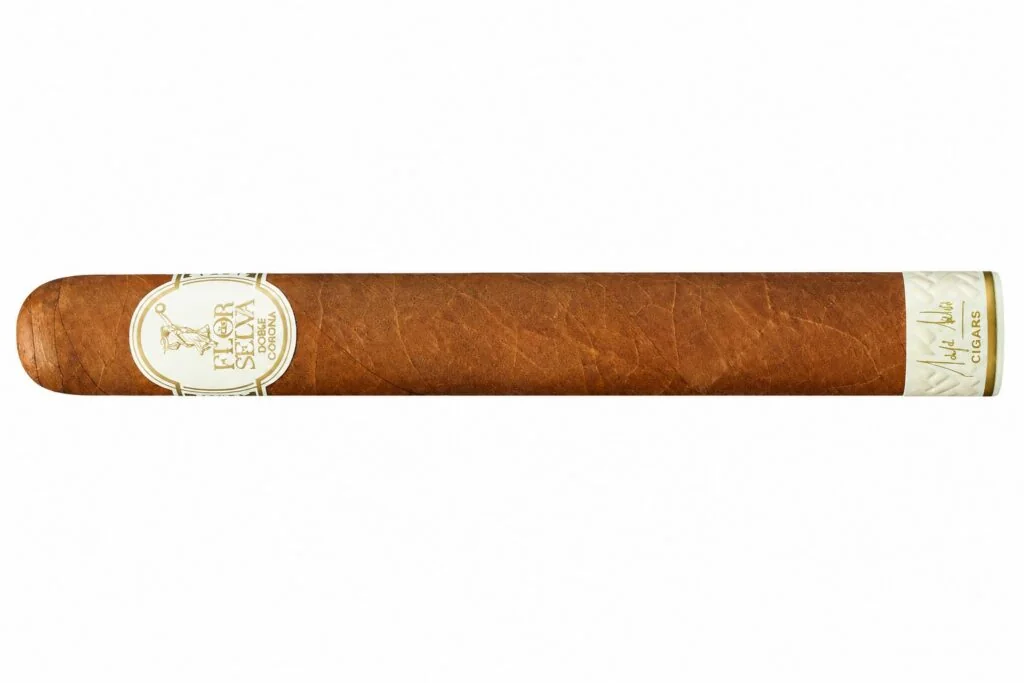
“If I have to choose one line, it is Flor de Selva Classic with a Connecticut wrapper. Maya is behind all our blends, and in this series each vitola was designed with a particular moment or a particular type of smoker in mind. But I always say that the next cigar we introduce will probably be my favorite, because it will already contain everything we have learned from our previous creations.”