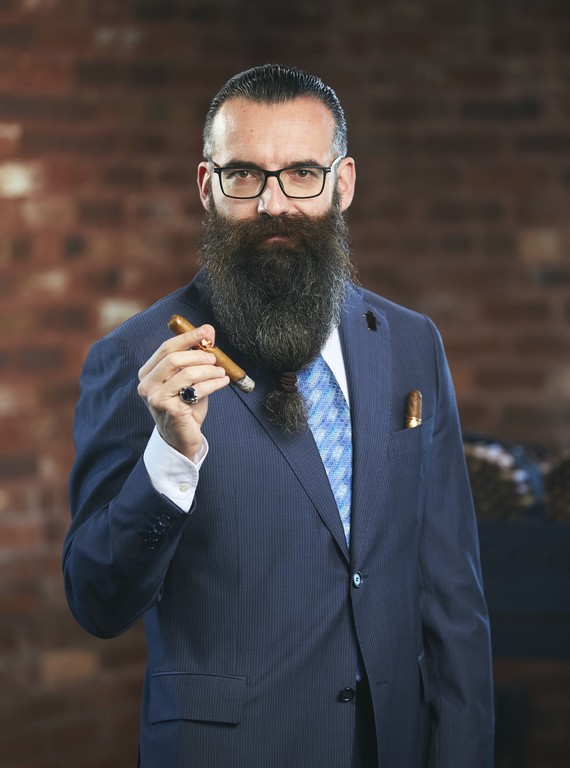
On a November afternoon last year, at the HarMoni Lounge in Tel Aviv, I met with Aldo Puncioni, who had arrived in Israel as a guest of Esh-Li Cigars, the official importer of J.C. Newman cigars, to conduct several masterclass workshops for the Israeli cigar community.
Puncioni carries with him years of hands-on experience from the European market, decades of intimate familiarity with retailers and smokers, and another hat that only a few truly wear: someone who speaks about cigars not merely to sell them, but to explain, refine, and teach. His genuine passion for the cigar world is evident in every movement and every word.
In 2021, he joined J.C. Newman as International Sales Manager—an impressive title on paper, yet the man himself is far more impressive than the title.
The first thing that catches the eye is his remarkable beard. It is also the origin of one of his most recognizable identities within the cigar community: “Smoking Moses.”
This is more than just an online nickname. Puncioni built around it the persona of a field guide—armed with dry humor and an engineering mindset (he is indeed trained as an engineer)—and even created his own version of the “Ten Commandments” of cigar smoking, a set of small rules that connect ritual, discipline, and enjoyment.
Throughout our conversation he moved effortlessly between technical precision and a good story, always demonstrating a rare ability: turning knowledge into something practical that you can apply to your very next cigar.
We opened the interview with a Diamond Crown Julius Caesar, cut with the Smoking Moses Razor Cut—a premium cutter designed by Puncioni himself, which won an international accessories award in 2024.
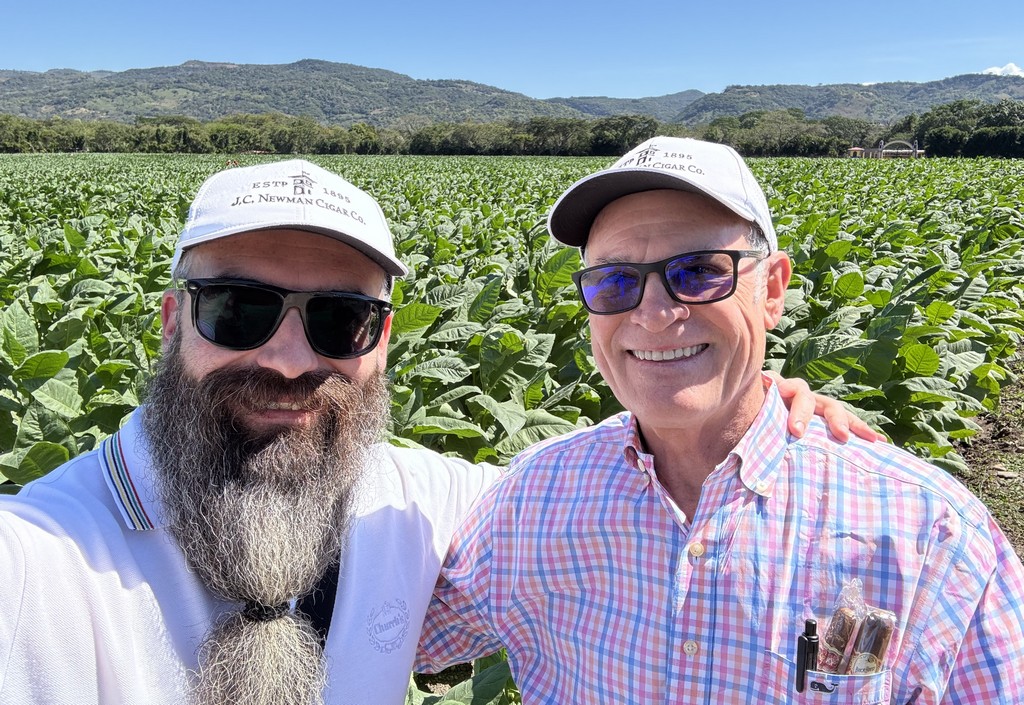
Photo: Private collection.
When you joined J.C. Newman in 2021, what did you already know about the company—and what changed for you afterward?
“I came to it from the field. I was a retailer in Venice for about eleven years, and Newman was one of the brands we carried in the shop for many years. I knew the portfolio, the philosophy, and I had the chance to meet Bobby, Eric, and Drew at trade shows.
I was also a close friend of Stefan, who previously held my position, and we spoke often about the company—about its values and about the fact that it’s a family business with real heritage.
When they approached me it was a huge surprise and a great honor. And when a company like J.C. Newman calls you, you simply run.
But if there’s one thing that really became clear after I joined, it’s how genuine the care for people is. From the outside you hear that they have a great reputation, that the cigars are excellent, that their story is strong—but the way they truly care about people, you only understand that once you’re inside.”
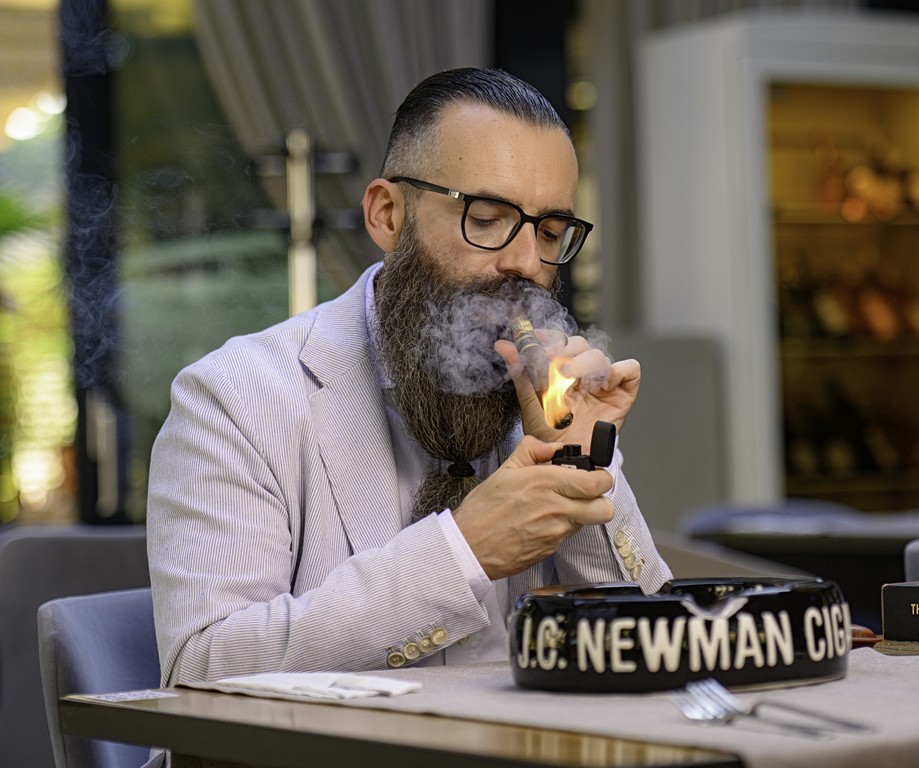
Photo: Private collection.
And when did it become more than just a strong brand for you?
“That actually happened very early.
In 2021 I was traveling in northern Germany, caught COVID, and had to spend ten days in quarantine in what was basically a hotel converted into an isolation facility in a small town in the middle of nowhere. It was rough.
Then Bobby Newman started calling me every day. Every single day. Not for work, not for numbers. He simply wanted to spend half an hour talking to me—telling stories, making me laugh, helping the day pass more easily.
He said to me: ‘You were out there representing my family and spreading the love for cigars, and now you’re stuck alone in this situation. The least I can do is spend some time with you.’
That’s something you don’t expect from someone running such a large company, with thousands of employees in the United States and Nicaragua and a thousand things on his plate.
For me, that was proof. That was the moment I understood—they truly care more about people than about the business.
Since then, that feeling has only grown. I have a sense of safe landing there, as if I’m sitting on the shoulder of a giant.”
How do you connect an American heritage brand with a European audience that isn’t easily impressed by the number of years?
“That’s one of the most delicate challenges.
Europeans are proud of their history, and sometimes a hundred years for us in Europe feels like nothing.
But we actually have a real advantage, because the company’s roots are also European. Our founder, Julius Newman, was an immigrant from Europe—from a region that was then part of the Austro-Hungarian Empire.
That gives me a natural bridge.
I try not to rely only on the age of the brand. I talk about the cigars themselves, about the philosophy of a family company that has survived for 130 years.
In the end, to truly connect you need to be physically present—to meet people, explain things, educate.
Education, education, education.
That’s what builds a real relationship.”
What changes do you see today in the cigar world—in taste and smoking habits?
“First of all, the audience is becoming younger.
In the past I was unusual as a young cigar smoker. Today you meet quite a few cigar enthusiasts between 22 and 30.
Their palate is different. The older generation grew up on Cuban cigars and Davidoff, looking for something delicate and elegant. Today there’s much more openness—and much more appetite—for strength, spice, for what I call a ‘kick.’ Things that once were almost impossible to sell.
Sizes have also changed. Once a 54 ring gauge was considered a monster. Today 60, 70, even 80 barely raise an eyebrow.
Part of it is also the show-off culture of social media.
Still, I’m a fan of smaller ring gauges. They’re more precise, more elegant—and you taste the wrapper much better.”
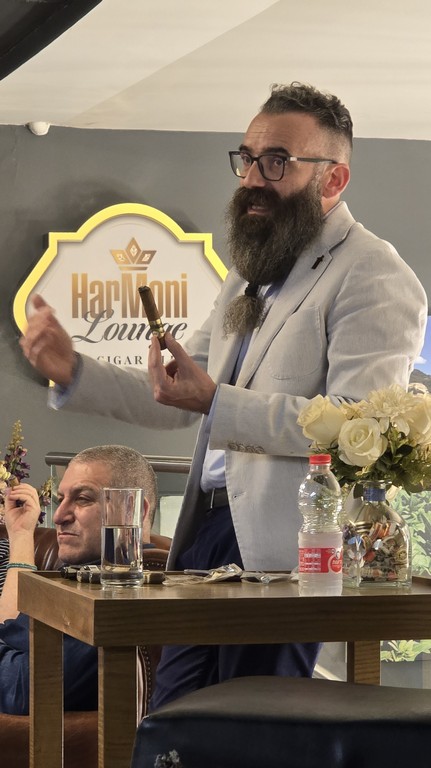
Photo: Cigar Magazine.
In your workshops you analyze a cigar almost like an engineer. How does that approach improve the experience?
“It helps—but it also makes things harder.
I always say it’s like a conductor attending a concert: instead of simply enjoying the music, he’s constantly analyzing what each instrument is doing, why something works, and where there’s a mistake.
Since I started writing reviews, it’s hard for me to switch my brain off. I smoke and immediately look for signs of problems—mistakes, imbalance.
So I had to develop a method, especially when reviews are published officially. An inaccurate word can hurt hundreds of people who worked on that cigar.
Some things are objective—like ammonia, which indicates incomplete fermentation. That’s not a matter of taste.
But aromas and flavors are subjective.
The method helps separate the two, and also gives the smoker a key to understand and describe what they are experiencing.”
Finally—your first visit to Israel. What did you take away from meeting the local community?
“I arrived with no expectations. I always do that so I can stay open and unbiased.
What I found here was genuine curiosity. People listened to every word—you could really feel they were absorbing the content.
It’s still a relatively young cigar market, but it has energy, investment, and beautiful places where people can enjoy the hobby together.
When there is space, culture grows.
I’m sure it will only get stronger—and I definitely plan to come back.”