Anyone wandering through the world’s great cities can hardly ignore the vibrant visual richness of contemporary street art. Beyond the traditional tourist attractions, exploring a city’s murals and graffiti offers an authentic urban experience—one that reflects daily life as locals experience it.
Graffiti dates back to ancient Roman times and has accompanied human civilization throughout history. Modern street art, however, emerged in the 1980s as part of hip-hop and breakdance culture. Initially controversial because it was created secretly and without permission, it gradually became more accepted. Today, municipalities around the world commission street artists to revitalize neglected neighborhoods, attract visitors, and boost tourism.
The word graffiti derives from the Italian graffiare, meaning “to scratch” or “to inscribe.” Traditionally, graffiti is text-based, while street art places greater emphasis on imagery and illustration. Street artists employ a wide variety of techniques, including murals, graffiti lettering, mosaics, posters, stickers, and stencils to transform walls, sidewalks, and abandoned buildings into public canvases.
This art form is designed to engage passersby directly. Accessible to everyone, it serves as a powerful expression of artistic freedom, often created anonymously under pseudonyms. Behind every mural lies a story—whether it conveys a personal message, political commentary, social criticism, or a protest against the traditional art establishment that often excludes these artists from conventional galleries and museums.
One of street art’s greatest strengths is that no formal appreciation of art is required to enjoy it. It is an authentic experience absorbed while simply walking through the streets, naturally blending with the atmosphere of the surrounding neighborhood and community. Many cities now offer guided street art and graffiti tours, providing visitors with a deeper understanding of local culture and urban life. Because street art is constantly evolving, it is also inherently temporary. A mural visible today may disappear tomorrow due to weather, demolition, or new artwork painted over it.
Here are five cities with particularly vibrant street art scenes.
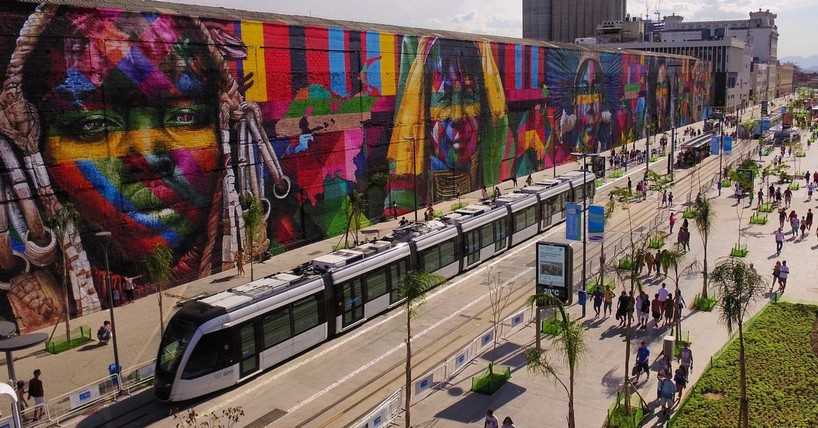
Rio de Janeiro, Brazil – Olympic Boulevard
Rio de Janeiro is famous not only for its spectacular beaches and samba, but also for one of the world’s most impressive public artworks.
In preparation for the 2016 Olympic Games, Brazilian muralist Eduardo Kobra was commissioned by the International Olympic Committee to create what was then recognized as the world’s largest mural.
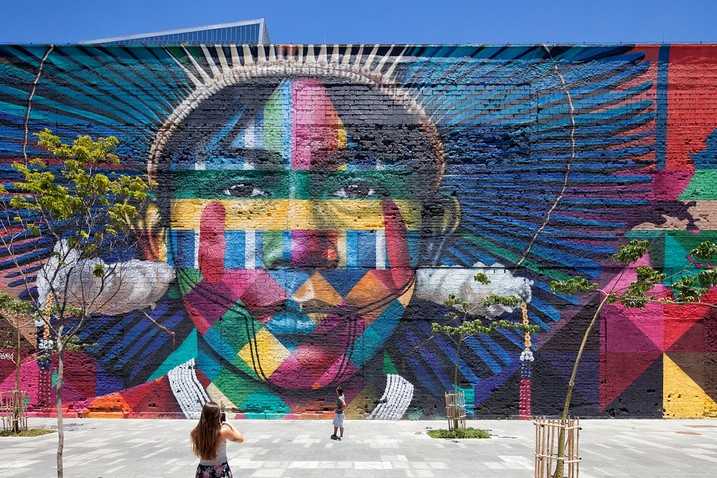
Located in Rio’s revitalized port district, Olympic Boulevard features a mural measuring 190 meters (623 feet) long, 15 meters (49 feet) high, and covering nearly 3,000 square meters (32,300 square feet). Kobra painted five Indigenous faces representing the five inhabited continents, echoing the five Olympic rings.
Entitled “We Are One,” the mural symbolizes the interconnectedness of humanity and celebrates unity among all peoples of the world.
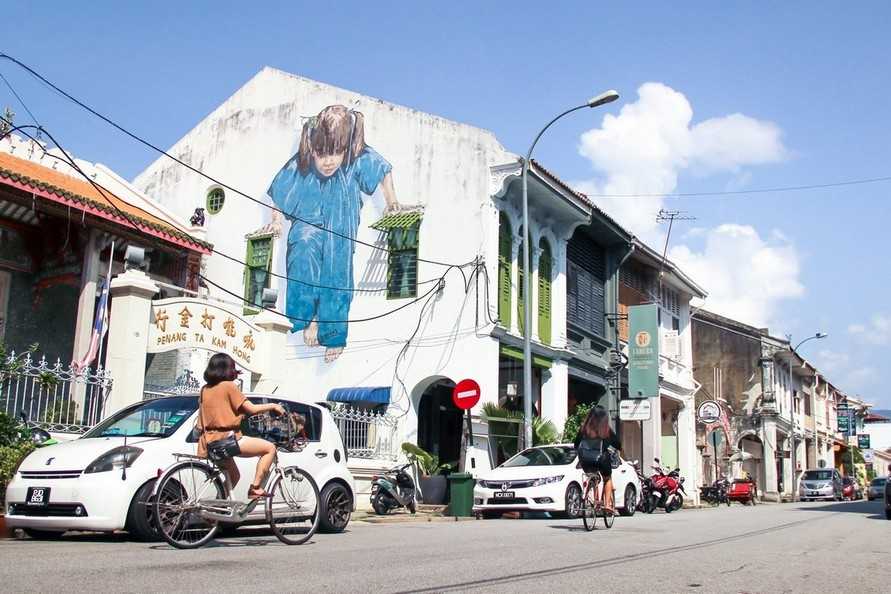
George Town, Penang, Malaysia – “Mirrors George Town”
George Town, the capital of Penang, is a UNESCO World Heritage Site renowned for its rich multicultural history. In recent years, it has also earned international recognition for its charming street art, which adorns the walls of historic Chinese shophouses and countless streets throughout the city.
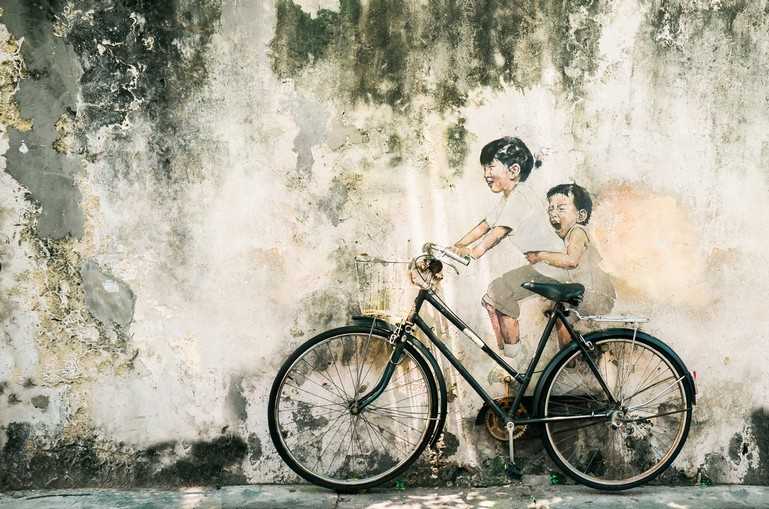
Children riding a real bicycle incorporated into the mural. Photo: Shutterstock
In 2012, the city commissioned Lithuanian artist Ernest Zacharevic, together with several other artists, to create a public art project aimed at breathing new life into aging walls. The project, known as “Mirrors George Town,” depicts everyday local life with warmth and humor.
A distinctive feature of Zacharevic’s work is the seamless integration of real-world objects—such as bicycles, motorcycles, and swings—into painted scenes, inviting visitors to physically interact with the artwork.
Lima, Peru – Fugaz: Callao Monumental
In the neighboring port district of Callao, adjacent to Lima, Israeli art enthusiast Gil Shavit, who resides in Peru, established the Fugaz – Callao Monumental project several years ago.
Once notorious for crime and drug trafficking, the neighborhood has been transformed into one of Lima’s most vibrant cultural destinations. The initiative seeks to break the cycle of violence by creating a place where community, art, and culture flourish together, regardless of religion, gender, ethnicity, or socioeconomic background.
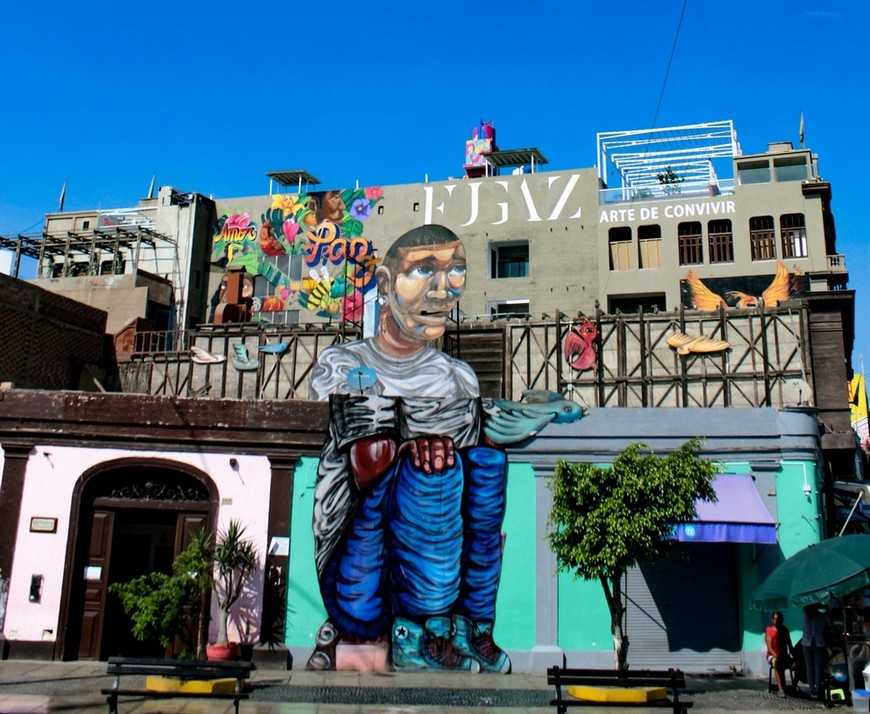
The transformation began through collaborative street art. Local and international artists painted alongside neighborhood residents—both adults and children—creating more than sixty stunning murals surrounding the project’s restored central building.
Today, the complex includes art galleries, exhibition spaces, artists’ studios and residences, live music and dance venues, restaurants, boutiques, and cultural events. Local residents also have access to educational programs in art, sports, English, and computer skills, helping create brighter opportunities for the future.
Callao’s street art route is considered one of the six most significant in Latin America by local media.
New York City, USA – Bushwick, Brooklyn
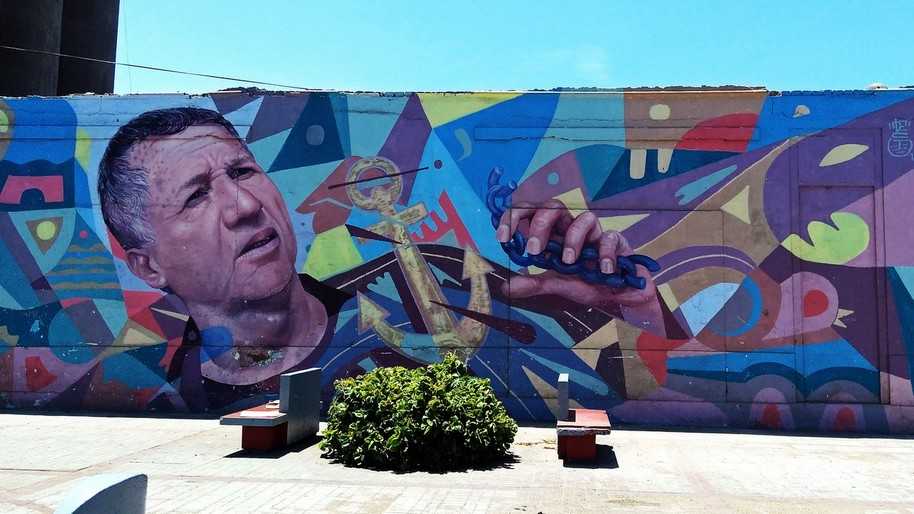
No discussion of street art would be complete without New York City—the global birthplace of modern graffiti culture.
What began in the 1970s as an illegal form of expression by street gangs and political activists eventually evolved into an internationally recognized art movement. Murals now decorate subway cars, bridges, industrial buildings, and alleyways throughout the city. In recent years, commercial brands have also embraced the medium, commissioning street artists to create large-scale advertising murals.
New York’s street art scene flourishes in neighborhoods such as the Lower East Side, Chelsea, the Bronx, Harlem, and especially Williamsburg, Brooklyn. During the 1990s, Williamsburg transformed from an industrial neighborhood into a thriving artistic community filled with cafés, galleries, and murals.
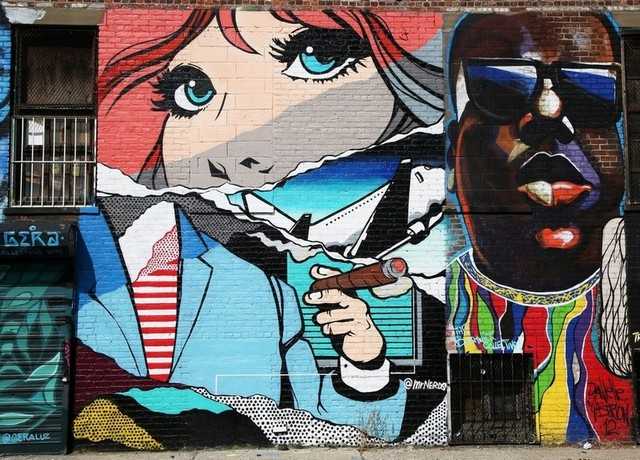
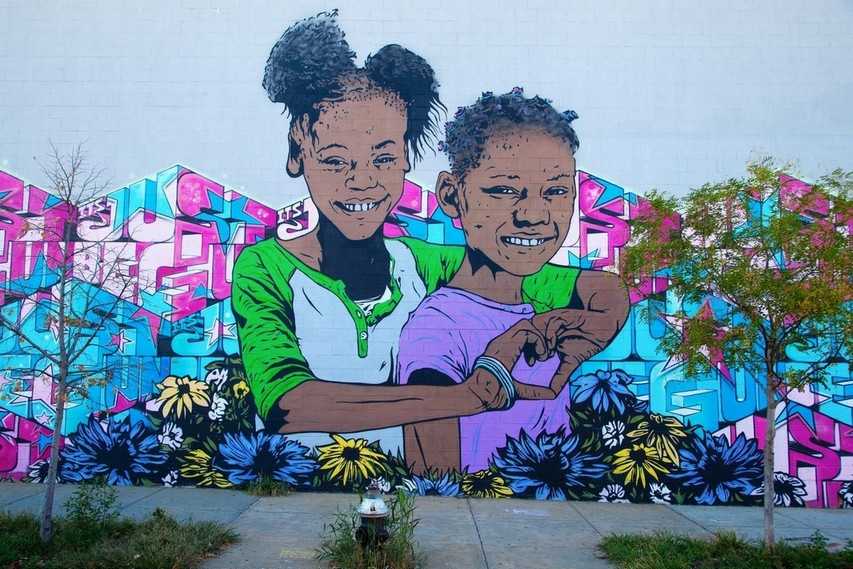
As property prices rose, many artists relocated to nearby Bushwick, now one of Brooklyn’s premier street art destinations. Former factories and warehouses are covered with monumental murals, many curated by the Bushwick Collective, founded in 2012. The organization brings together internationally acclaimed artists who legally transform the industrial district into a constantly evolving open-air museum.
Berlin, Germany – East Side Gallery
The East Side Gallery is the world’s largest open-air gallery.
It occupies the longest surviving section of the Berlin Wall, serving as a powerful historical reminder of the city that was once divided between democratic West Berlin and communist East Berlin. Twenty-eight years after its construction, the Wall fell, marking the collapse of communist rule across Eastern Europe.
Stretching approximately 1.3 kilometers (0.8 miles), the gallery has become one of Berlin’s most visited landmarks.

The remaining wall is covered with over one hundred murals created by artists from 21 countries, expressing themes of oppression, freedom, hope, and political change.
Among its most famous works is the “Fraternal Kiss,” portraying Soviet leader Leonid Brezhnev kissing East German leader Erich Honecker. The painting highlights the irony of the communist regime by depicting an intimate gesture between two leaders whose ideology rejected homosexuality.
Other iconic murals include the Trabant automobile breaking through the Berlin Wall, scenes of East Germans escaping to the West, and “Fatherland,” a mural combining the flags of Germany and Israel into a single symbol representing peace, friendship, and reconciliation among nations.