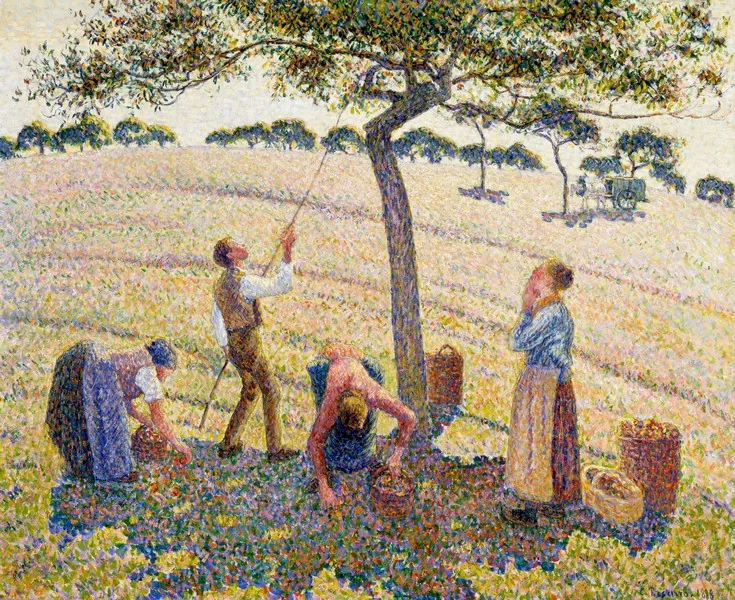
Camille Pissarro was a French Jewish artist, a central figure and driving force behind Impressionism, which developed in Europe, and particularly Paris, in the second half of the nineteenth century. He wrote the movement’s manifesto and was the only artist to participate in all eight exhibitions held by its members.
Pissarro guided and inspired many artists, including Claude Monet, Paul Gauguin, Paul Cézanne and Georges Seurat. He focused on nature, fields, villages and the everyday lives of workers and labourers, while also painting urban squares and quiet streets. Like his fellow Impressionists, he advocated painting outside the studio, in the open air. This allowed him to capture the light at a particular hour and preserve the fleeting, constantly changing moment in a landscape.
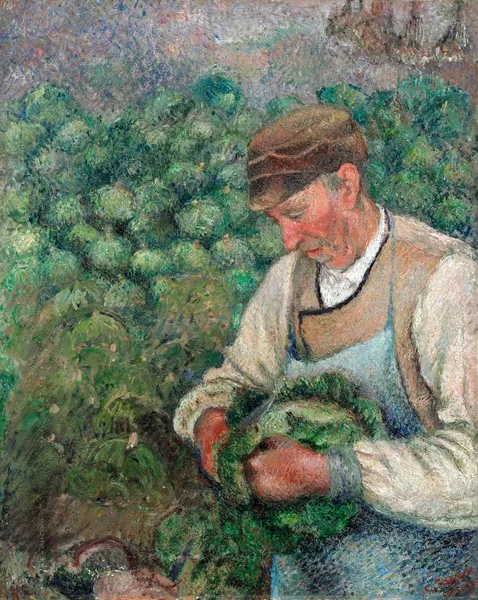
Pissarro’s paintings were considered groundbreaking in their time. They featured quick, light brushstrokes in bright colours which, seen up close, looked like indistinct smears of paint, contrasting with the precise, faithful rendering of reality in traditional painting.
Pissarro continued painting until his death at 73, leaving around 1,500 works. During his lifetime, he also turned to Pointillism, a style based on painting with dots, associated with Post-Impressionism.