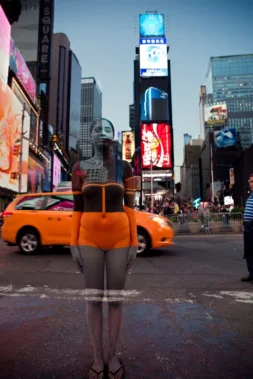

Trina Merry is an American multimedia artist, born in 1980, recognized as one of the world’s leading body painters. She paints the human body to create a hyperrealistic illusion in which viewers’ eyes cannot distinguish the human figures from their surroundings. Merry has developed a distinctive artistic language, focusing on camouflaging people within landscapes and creating human sculptures composed of several figures, thanks to her considerable artistic talent and exceptional precision.

Body painting has an ancient tradition across cultures. In her work, Merry combines the media she loves: body painting, photography, installation, video and digital art. After a precise and painstaking painting process, she positions her figures within landscapes or urban architecture and photographs them immersed in their surroundings.

Painting on the body differs from painting on traditional canvas. Technically, the human body is harder to paint because it is three-dimensional. As Merry explains, “Painting on the body is a distinctly human experience, because it creates a special connection between the artist and the person being painted. The work has a sparkle in its eyes, a pulse, breath and a heartbeat, and it is dynamically alive.”
Her work is inherently temporary and fleeting. It is washed away after being photographed and is not intended to be preserved. The transient nature of painting the human body reflects the reality of our existence, in which everything passes. After painting the body, Merry lets go of the experience, but the connection between her and the human figure always remains.
She paints both women and men, depending on the series. Her works are neither erotic nor sensual and contain no suggestion of sexuality, even though many of the figures are nude. She receives numerous requests, sometimes as many as 15 a day, from volunteers who want her to paint their bodies, and has an enormous waiting list of applicants from around the world. For her camouflage series, she selects women and men from a wide variety of backgrounds.
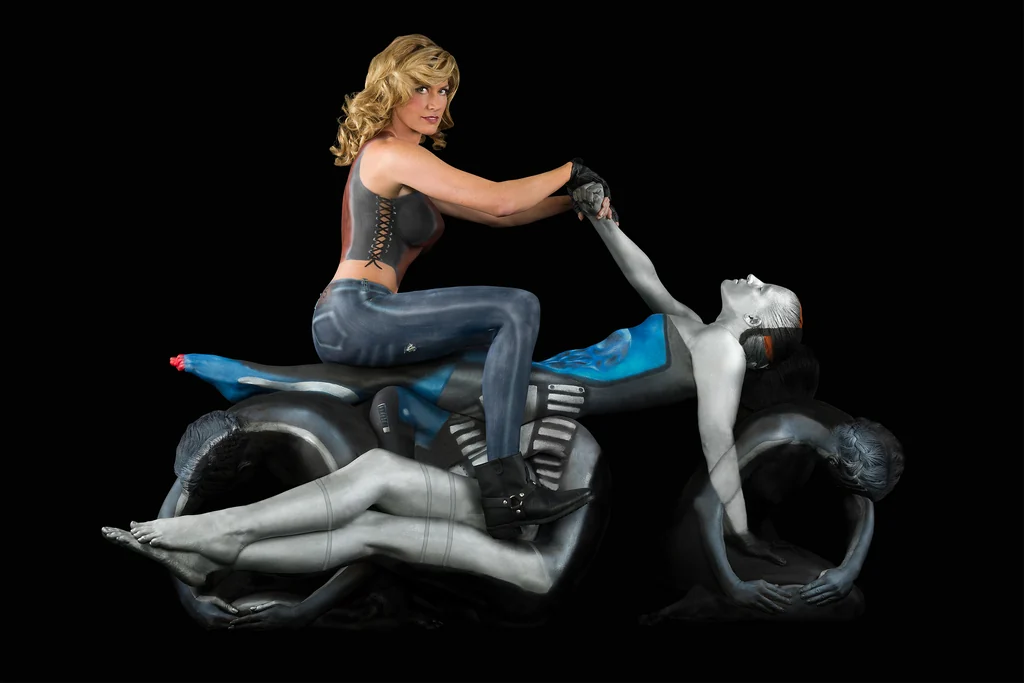
In her human-sculpture series, Merry sculpts several figures together. She chooses athletic, flexible people such as circus performers, dancers and yoga practitioners. After painting them, she intertwines them in contorted, challenging poses, together forming a living human sculpture that she photographs at the end of the process. She says the work that required the most hours was a sculpture of human sports bikes and dirt bikes, made up of several people. It took her 18 hours to create.
How It All Began
Trina Merry was born in Seattle, lived in California for most of her life and now lives and works in New York. She discovered body painting unexpectedly. According to her account, one day, while driving in Los Angeles, she was struck by a powerful bolt of lightning. She subsequently developed a sensitivity to electricity and experienced persistent pain whenever she passed electrical cables. Eventually, she sought refuge in the forest in Yosemite National Park, hoping that being in nature would ease her pain. She lived there for a year, during which she met Amanda Palmer, the rock singer who rose to fame as one half of The Dresden Dolls. Palmer encouraged Merry to appear onstage with her body painted during a performance by her band. In those moments, Merry felt an awakening in her body: art seemed to have a heartbeat. She then decided to focus on this medium.
She received her initial experience and training at a body-painting gallery in New Orleans, where she learned the technical aspects of body paints. She later initiated an art project in San Francisco in collaboration with some of the city’s finest graffiti artists. In it, she transformed the figures she painted into invisible superheroes, skillfully camouflaging their bodies against the graffiti-covered walls behind them.
Famous Tourist Landmarks
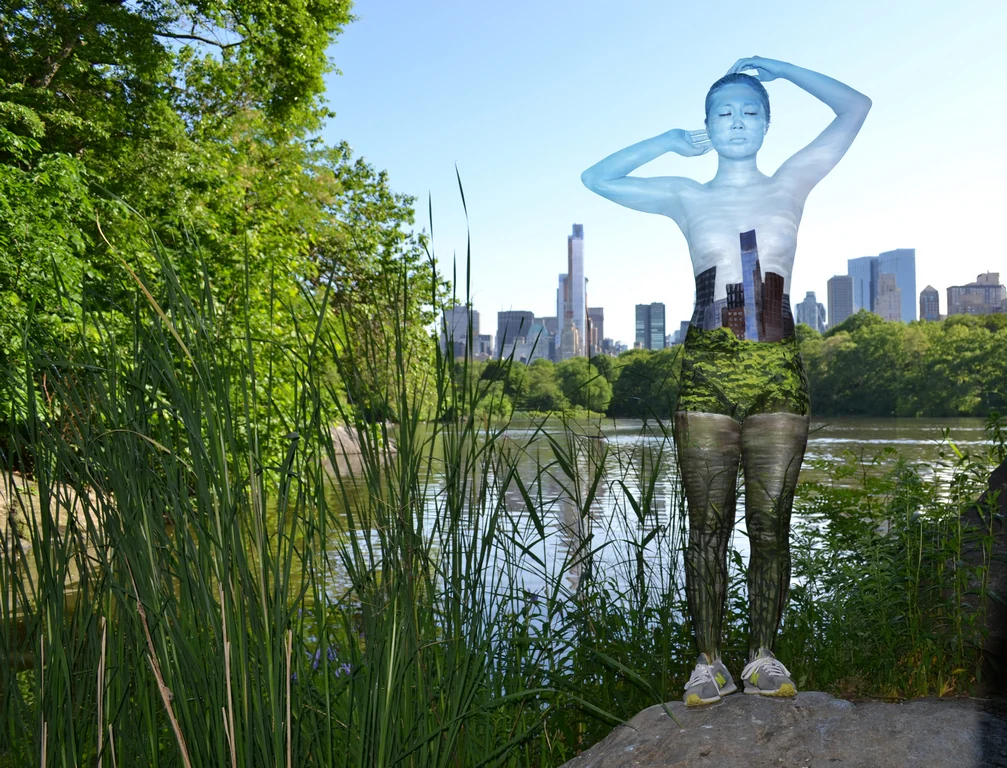
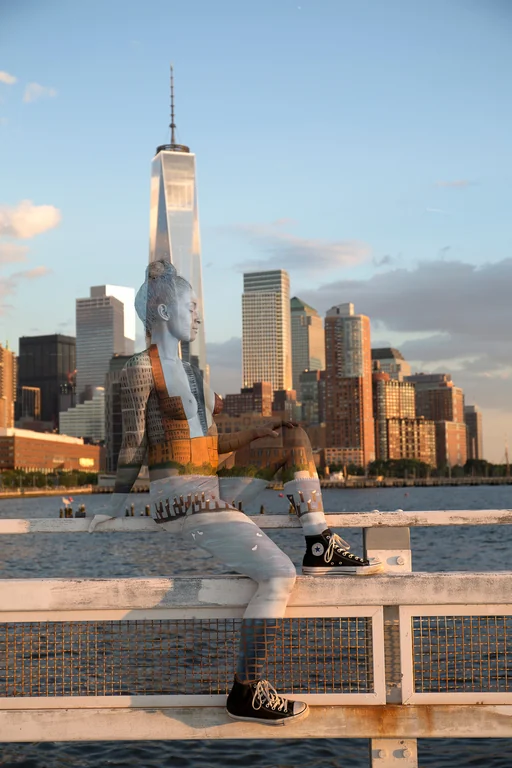
Merry expanded her camouflage series around the world, creating projects at celebrated landmarks: the Great Wall of China, Machu Picchu in Peru, the Great Pyramid of Giza in Egypt, Petra in Jordan, the Colosseum in Rome and El Castillo at Chichén Itzá in Mexico. At these sites she photographed spectacular landscapes, each concealing people who blend into the scenery in an almost inconceivable way.
In urban settings, Merry placed her painted models at famous locations in Washington, D.C., photographing them against the White House, the courthouse and the Lincoln Memorial. She also created a special New York series, incorporating painted figures against Central Park, Wall Street, Times Square, the Freedom Tower, Brooklyn Bridge and other locations. In these scenes, she illustrated how easily New Yorkers can feel invisible in such a vast city. She juxtaposed the rigid architectural lines of bridges and skyscrapers with the softness of twisting human curves to create thought-provoking images.
Iconic Paintings
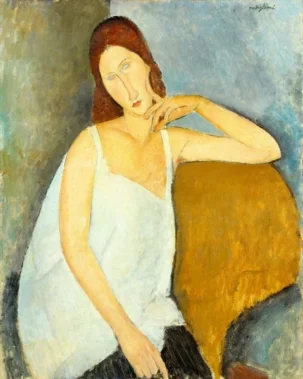
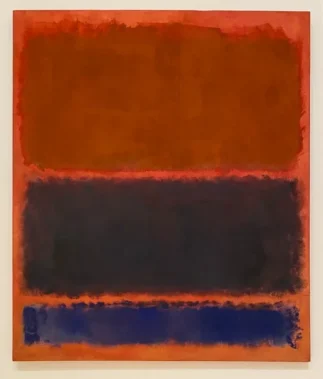
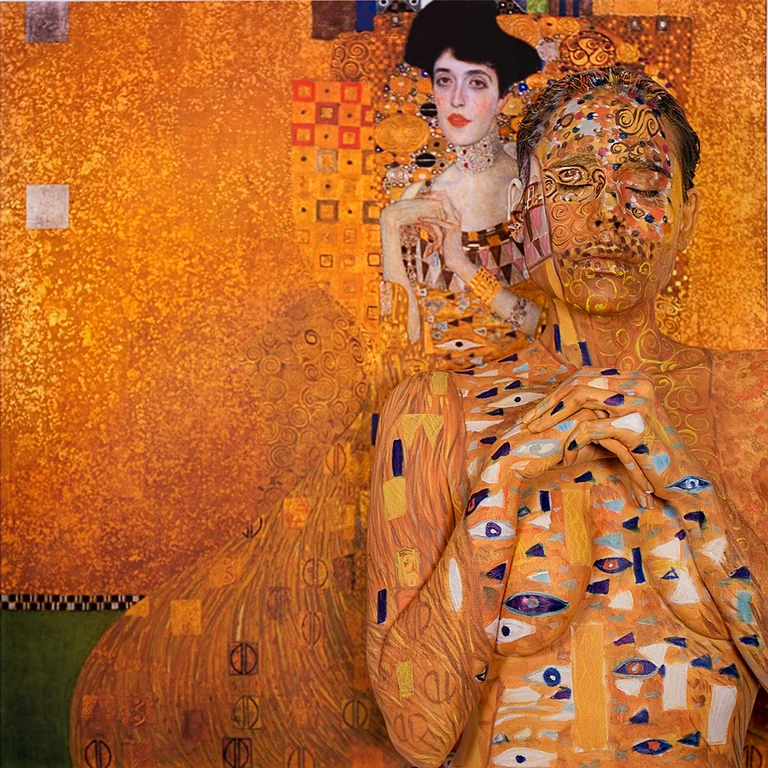
In a series titled “Lust of Currency,” Merry reinterpreted fifty masterpieces by renowned artists including Pablo Picasso, Leonardo da Vinci, Vincent van Gogh, Gustav Klimt and Jackson Pollock. She positioned her painted figures camouflaged within the most expensive paintings ever sold and documented them photographically. She named each work after the price paid for the original painting, seeking to critique and question how art is valued in the modern age: does it have historical, popular or financial significance? In the case of Leonardo da Vinci’s famous “Salvator Mundi,” she had to change the title from “$127,500,000” to “$450,000,300” after the original painting sold at auction for that astronomical sum to a Saudi prince.
Merry’s artworks have been shown in renowned galleries, museums and events around the world, including the Whitney Biennial, the Brooklyn Museum, Art Basel Miami and the Toronto International Film Festival. She continues to photograph her camouflage series in remarkable locations around the world and is represented in Israel by Gallery Wertheimer in Tel Aviv.