They say that in the early 1990s, when Jack Nicholson started spending hours on the golf course, the victory-hungry actor would smoke half a pack of cigarettes during one round. He then decided that from the fifth hole onwards, he would switch to cigars. The change was beneficial, both in calming the actor’s nerves and improving his performance.
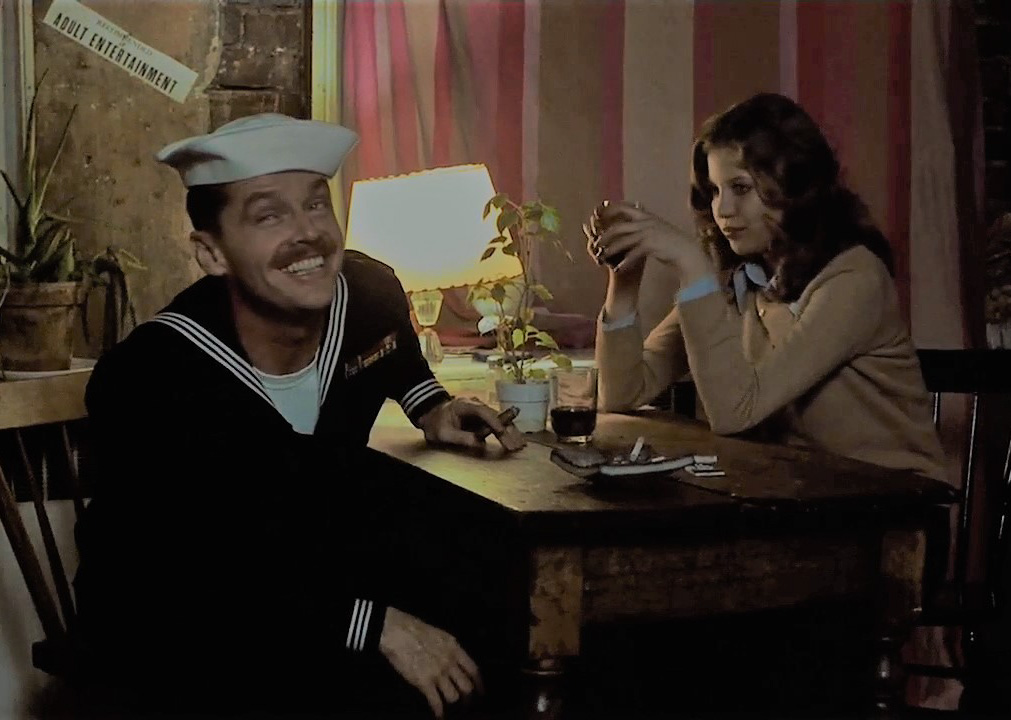
Nicholson’s first experiments with cigars began back in 1973 during the filming of “The Last Detail.” He thought a cigar would suit the character he was portraying. The movie was shot in Canada, which provided easy access to Cuban cigars, and these became his favorites as he continued his journey with the aromatic smoke. Being a devoted fan of the Los Angeles Lakers, his status allowed him to sit and cheer from the front row. For years, cigar smoke wafted near the court, but from the mid-1990s, smokers were relegated beyond the walls and fences. Nicholson, a true addict, admits he would smoke during breaks in the restroom: “Just like I did in high school when I smoked marijuana during breaks.” His favorite cigar is from Montecristo.
But cigars are “just” well-rolled tobacco leaves forming a long, aromatic cylinder. Jack Nicholson, on the other hand, is an actor of unparalleled stature. In 1997, Empire magazine ranked him sixth on its list of the 100 most important movie stars of all time. He was nominated for the Best Actor Oscar twelve times, won it three times, and was nominated in every decade since the 1960s—a feat only he and Michael Caine have achieved in cinema history.
Nicholson is the ultimate madman, the go-to choice for any director casting a high-stakes film with a character that has a spark of madness. But of course, his talent extends far beyond madness. While he gained most of his fame from such roles—the Joker in “Batman,” the insane writer in “The Shining,” and McMurphy in “One Flew Over the Cuckoo’s Nest”—his repertoire includes a wide variety of characters. Nicholson has three Oscars for his film roles, an achievement few actors can match.
He was also well-compensated for his work. For his role in “On a Clear Day You Can See Forever” in 1970, he earned $12,500. His salary climbed to millions per film over the years, with his peak earnings coming from “Batman” in 1989, where he secured a lucrative deal that included profit-sharing, earning him $60 million.
Following His Fate
Often, the greats in their fields come from unconventional beginnings. Jack Nicholson is on that list. He was born in the spring of 1937 in New Jersey. His mother, June Frances Nicholson, was a showgirl, and he knew nothing about his biological father. Unable to raise him, his young mother left him in the care of his grandparents, who raised him as their son. He believed his mother was his older sister. This peculiar cover story lasted until 1975 when a New York Times investigation revealed the truth: Nicholson, then 38, chose never to search for his biological father.
After finishing high school, Nicholson decided to seek his future in Hollywood. He landed a job in the mailroom of MGM’s animation department. However, the ambitious young man aspired to be an actor and found his way to the screen for the first time in 1956 at 19, appearing in a minor role in a television movie. This marked the beginning of years of increasing television presence in the early 1960s. In 1958, he made his big screen debut in a low-budget film, and in 1960, he had a minor role in “Little Shop of Horrors,” his first notable film.
By 1966, Nicholson wrote, produced, and starred in the western “Ride in the Whirlwind,” his first significant role. His breakthrough came with the 1969 film “Easy Rider,” alongside Dennis Hopper. The two young actors would go on to become Hollywood’s celebrated “madmen.” For his role in “Easy Rider,” Nicholson received his first Oscar and Golden Globe nominations.
From there, he continued with remarkable films such as “Five Easy Pieces” (1970) and “The Last Detail” (1973).
In 1972, Francis Ford Coppola offered him the role of Michael Corleone in “The Godfather.” Nicholson declined, believing the part should be played by an actor of Italian descent. This is what they call artistic integrity.
1974 and 1975 Produced Two Wonderful Classics
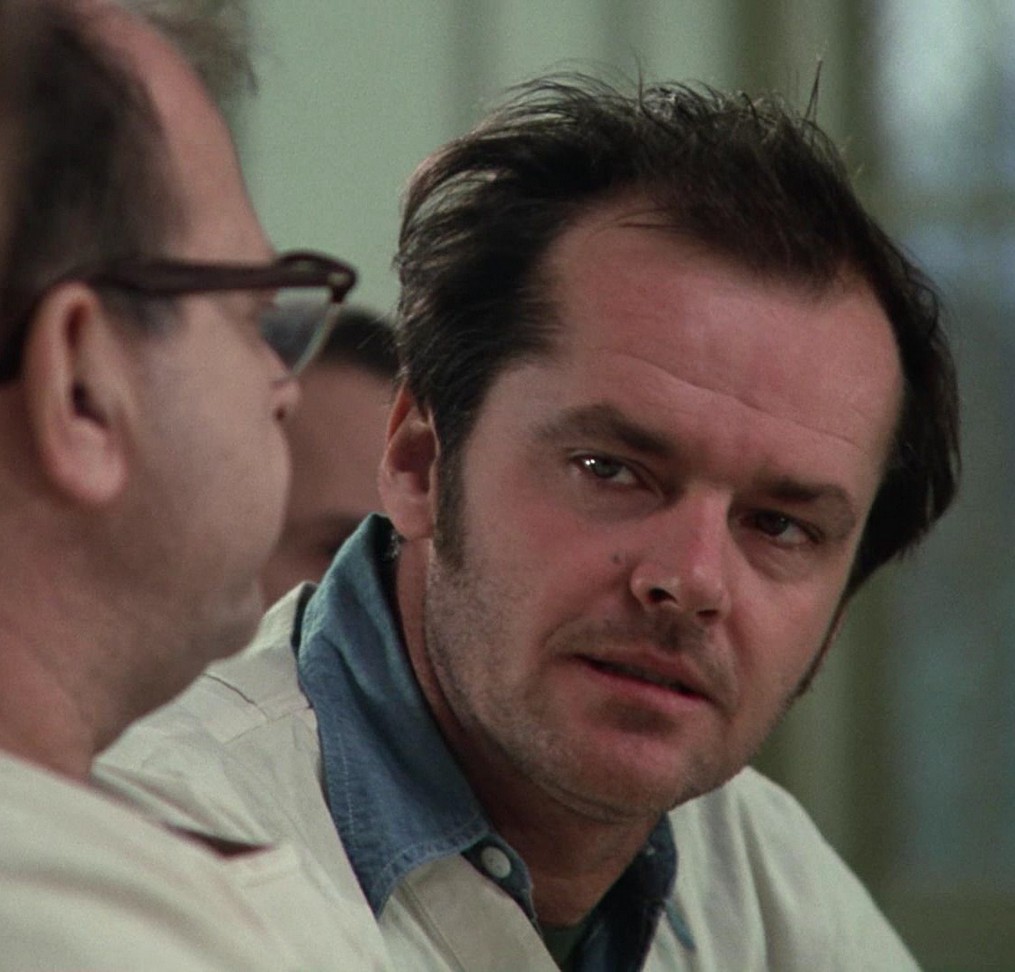
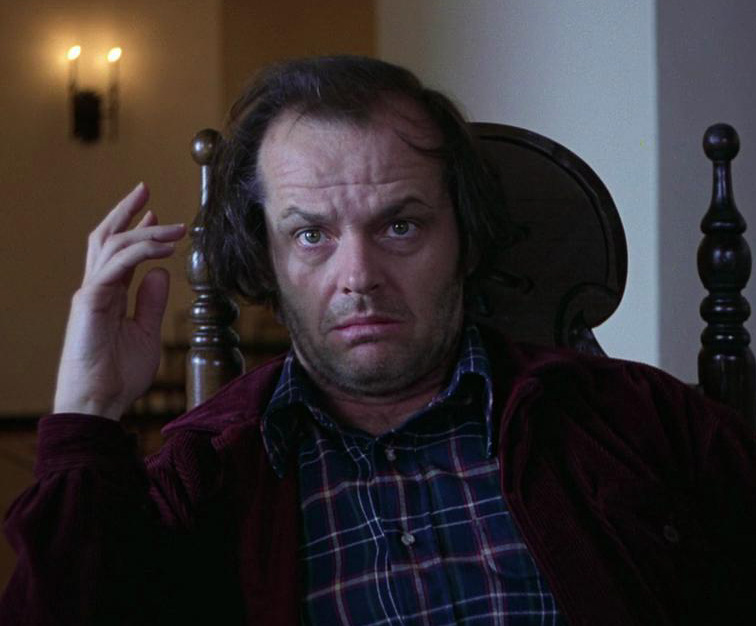
Roman Polanski’s “Chinatown” (1974) and Milos Forman’s “One Flew Over the Cuckoo’s Nest” (1975) are two classic films that further solidified Jack Nicholson’s legendary status. For “One Flew Over the Cuckoo’s Nest,” Nicholson received his first Oscar. Another unforgettable performance was in Stanley Kubrick’s “The Shining,” where Nicholson unleashed his full madness. This madness lurked beneath his watery eyes, deeply set in his large head, with words that always flowed softly and slowly, stretching like gum.
The films for which Nicholson won the Best Actor Oscar are “One Flew Over the Cuckoo’s Nest,” “Terms of Endearment,” and “As Good as It Gets.” For these three, he also won the Golden Globe. He also won Golden Globes for “About Schmidt,” “Prizzi’s Honor,” and “Chinatown.”