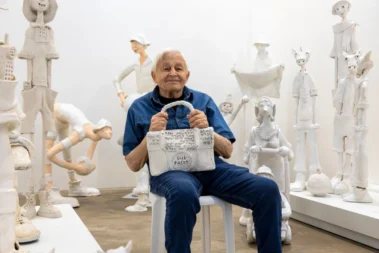
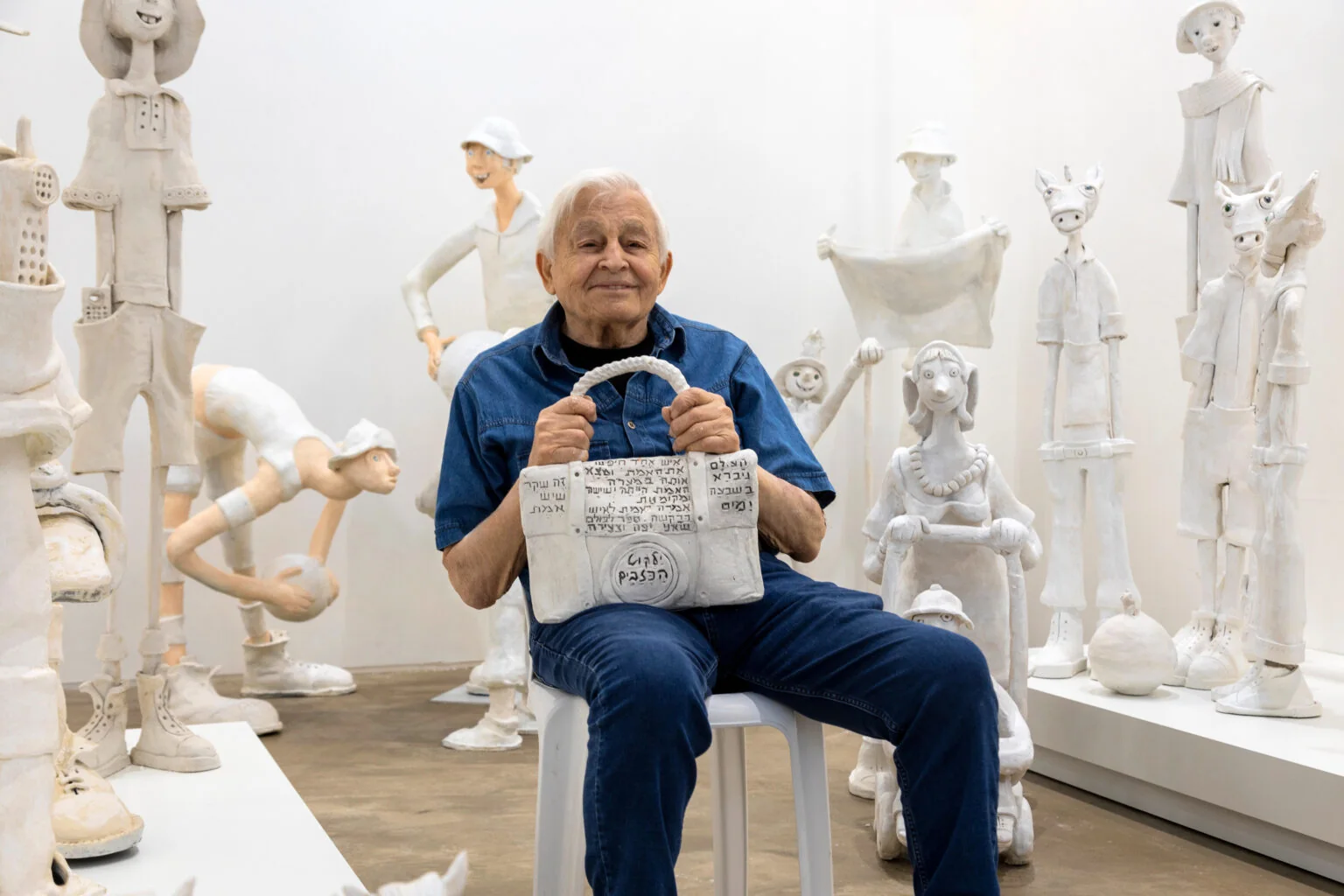
At the annual Fresh Paint art and design fair, held in Tel Aviv in early July, Aharon Shani presented an exhibition of his humorous, all-white sculptures as part of “Projects 2024”. They drew considerable interest and enthusiasm from visitors. The exhibition was curated with great charm and talent by his granddaughter, Lihi Shani, an accomplished artist in her own right. Over the past two years, she has joined her grandfather’s studio as an assistant and taken on the task of introducing his work to a wider public, giving decades of creativity the platform they deserve.
Born in 1931, Shani is a self-taught artist who developed his own distinctive sculpting technique. He began his artistic journey 65 years ago, when he was a businessman in the insurance industry, sculpting tirelessly into the small hours. He immigrated to Israel with his parents from Yugoslavia at the age of one and lived in Tel Aviv’s Florentin neighbourhood. As a child, he belonged to the United Youth Movement. In 1948, he enlisted in the Israel Defense Forces and was among the first founders of Nahal. A lawyer by training and a graduate of the Hebrew University of Jerusalem, he is one of the veterans of Israel’s insurance industry.
As a young father, Shani would collect fragments of glass with his three small children and turn them into colourful chandeliers. Over the years, his children and then his grandchildren absorbed and breathed art, witnessing his creativity in every possible corner of the house: on the roof, in the living room and in the family kitchen. Twenty years ago, he took a studio in the city centre, where he still spends most of his time. This keeps him, he says, “healthy and clear-minded”. “Sculpture became a private secret, an escape from reality into a world of complete detachment, rather than something driven by a wish to exhibit or sell,” he notes.
Shani’s three children were drawn into creative worlds and have flourished in art and design, each in their own field. Sarit Shani Hay is a leading multidisciplinary designer and a pioneer of design for children in Israel and abroad. Gil Marco Shani is a renowned painter, photographer and installation artist who has won numerous awards, with works in private collections in Israel and overseas. He holds a bachelor’s degree in fine art from Bezalel in Jerusalem, where he also teaches as a senior lecturer. Shaked Shani, Lihi’s father, works in insurance and pursues art as a hobby, creating three-dimensional reliefs from pieces of rubbish he collects.
Humorous Sculpture
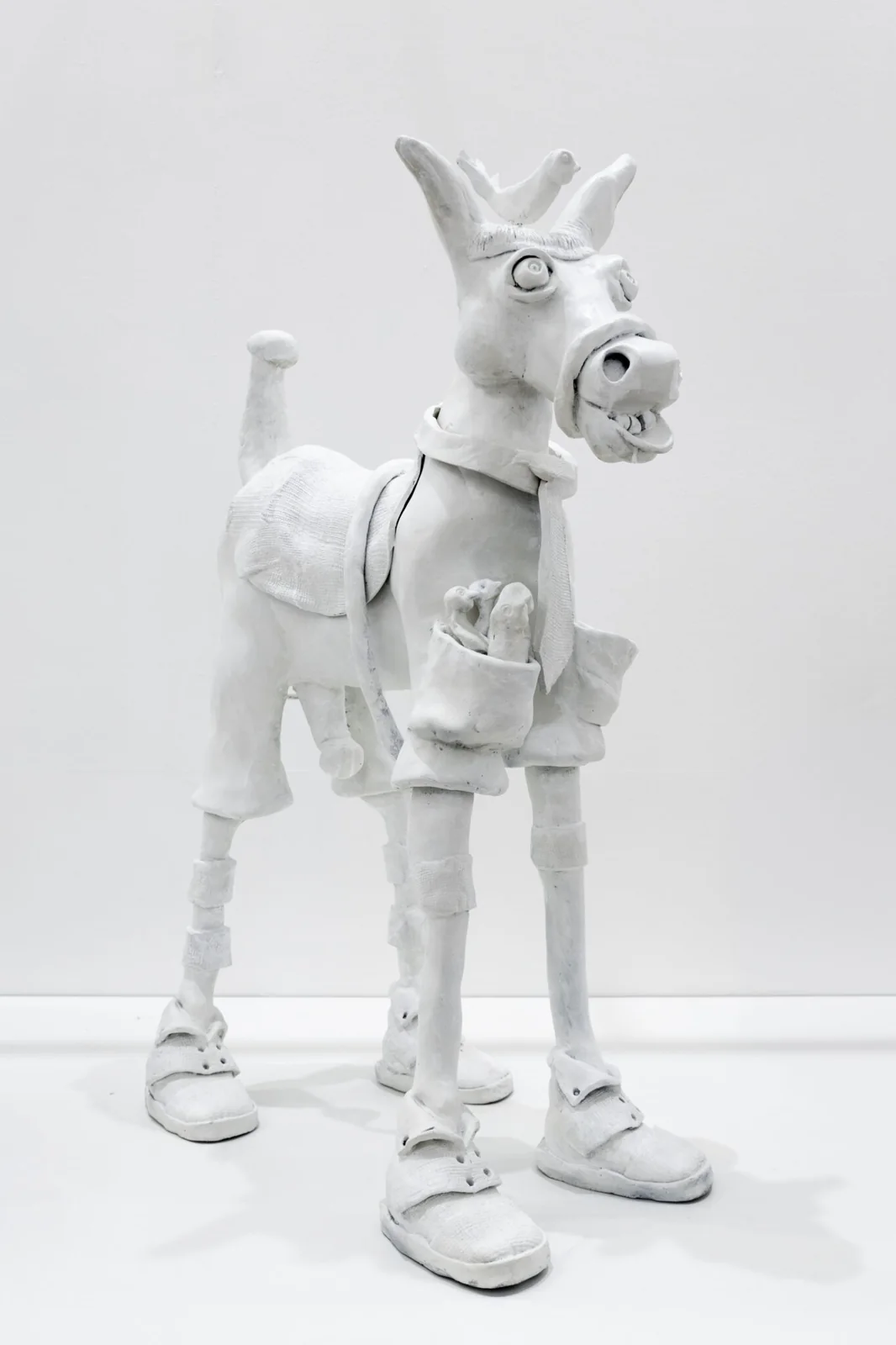
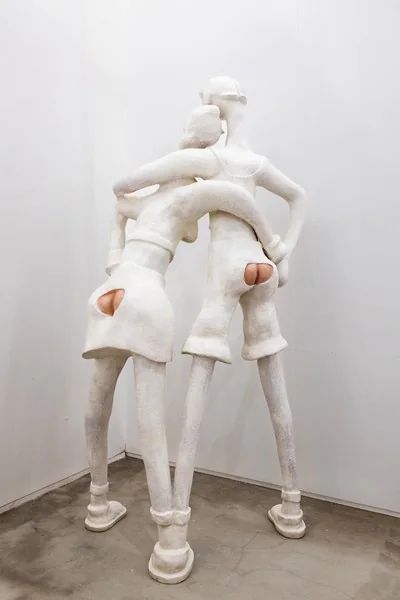
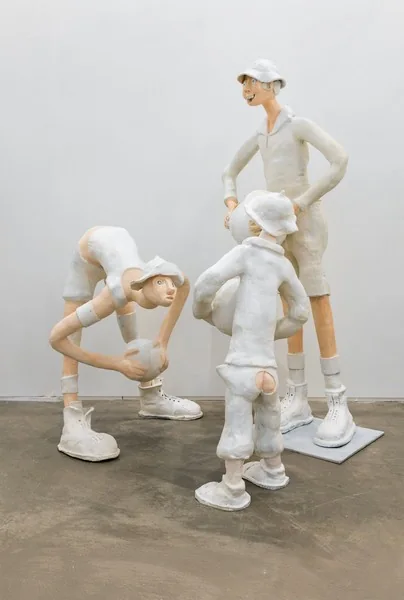
Aharon Shani’s figurative sculptures depict human situations and offer a glimpse into his distinctive worldview, characterised by humour and cynicism, taking nothing too seriously. He creates this world through a rich vocabulary of recurring satirical and stereotypical images: people and boys wearing army boots, tembel hats and cargo trousers with a tear exposing a patch of buttock. These lend his sculptures an air of amusement and unselfconsciousness. His figures are long and thin, recalling a cheeky Mediterranean and Israeli way of life, alongside the landscapes and people of the good old south Tel Aviv of the 1930s.
Roosters and birds, and especially life-size donkeys and horses, also feature in Shani’s childhood memories, when horses and donkeys served as transport in Tel Aviv’s streets. Through them, he divides the world in two: the horse symbolises noble, proud people, while the donkey represents the ordinary working person, burdening himself with tasks.
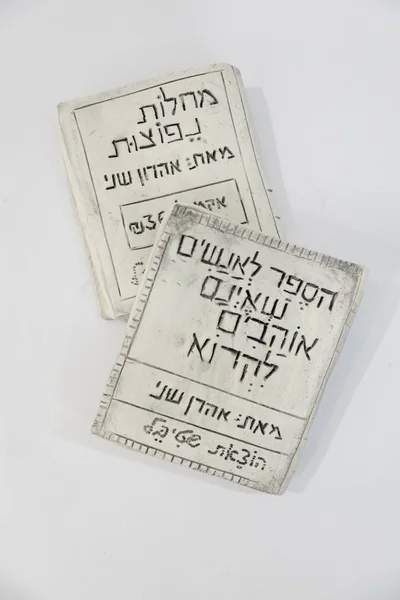
Shani also incorporates his love of the written word, literature and poetry into his work. He used to write limericks full of humour and cynicism, and made sculptures of books. He gave these books paradoxical titles, writing his own texts on their covers or quoting well-known poets. They hold up a mirror to a society that attaches great importance to titles and less to content.
His working process is based on an original method he developed himself rather than traditional sculpting techniques. He begins by building a structure from newspapers, sponges and rods, coating it with a material called DAS, a kind of modelling clay familiar from childhood. He then makes a mould for the sculpture, casts aluminium into it and begins painting.
The Second Generation: Sarit
Sarit Shani Hay is a pioneering multidisciplinary designer in Israel and internationally. She approaches design for children with great passion and a belief in the decisive influence of environmental design on a child’s development. Combining art and design, she creates original furniture, children’s rooms and stimulating learning spaces that turn learning into an enjoyable, playful experience. She designs spaces in homes, kindergartens, schools and public settings, including libraries, family therapy spaces, hotel children’s clubs and hospital playrooms. She recently published her book “Childhood Spaces”, presenting her design philosophy and work spanning almost three decades.
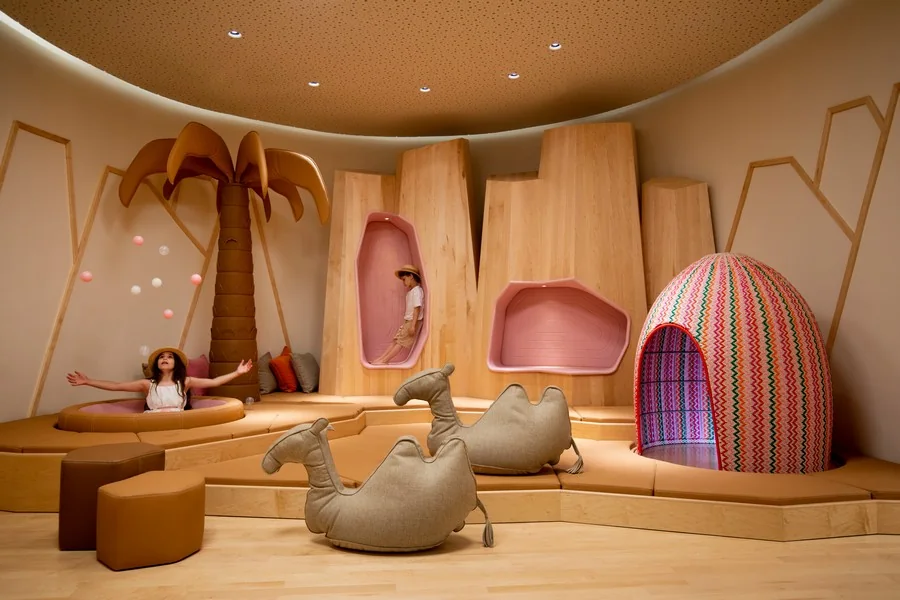
Sarit Shani Hay’s works have been shown in museums and galleries around the world, featured in magazines devoted to the design of educational environments and honoured with a wide range of awards.
The Third Generation: Lihi
Born in 1990, Lihi Shani graduated with honours from the Hamidrasha Faculty of Arts. She is known for sculptures and installations made from everyday objects she buys online. While many artists use raw materials such as canvas and paint, Lihi uses existing, ready-made objects. They are purposeless yet carry a cynical significance, reflecting the “bottomless pit” of unnecessary products generated by modern consumer culture.
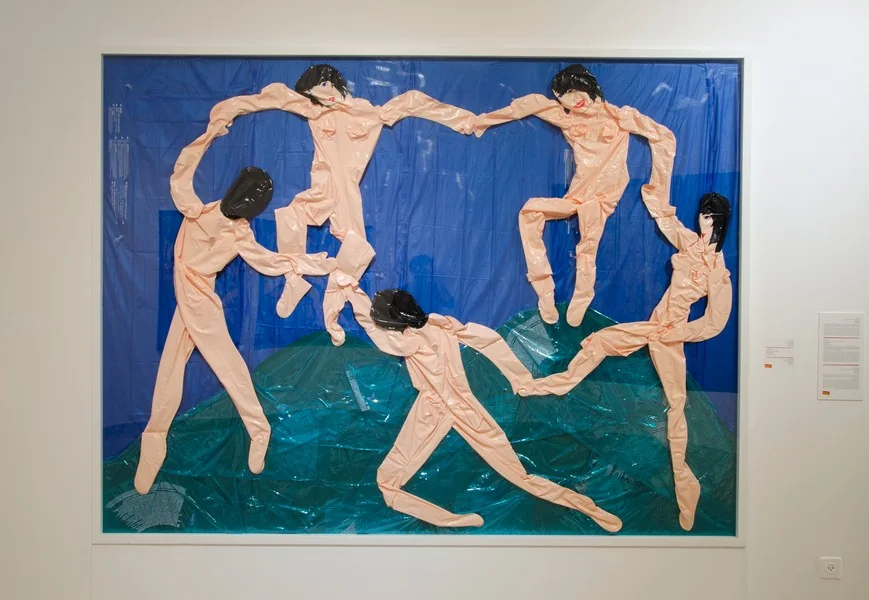
She uses dolls, mattresses and inflatable rings, puncturing them before sewing and gluing them into a kind of assemblage—a three-dimensional object made by joining different items. Sometimes she inflates a product until it bursts, then fills it with a hard polymer material and preserves it in a Perspex box for posterity. In effect, she changes the purpose of these everyday objects and offers another perspective on their original function.
On the one hand, Lihi criticises the mass consumption of industrially produced, cheap and worthless goods, which has become a kind of online obsession in the twenty-first century. On the other, she buys them herself to preserve them as “archaeological objects” that will testify, many years from now, to today’s shopping culture. These are generally items mass-produced in factories in China, whose manufacture causes environmental damage and air pollution.
In many of her works, Lihi refers to iconic pieces by famous artists. She has created a sculpted “Banana Peel” inspired by Maurizio Cattelan, “Legs” inspired by Tom Wesselmann, a “Pietà” inspired by Michelangelo, “Uplift” inspired by Menashe Kadishman, and a homage to Henri Matisse’s famous “The Dance”. This last work, made from punctured, life-size rubber dolls, was shown at Fresh Paint in 2017 and attracted considerable attention.
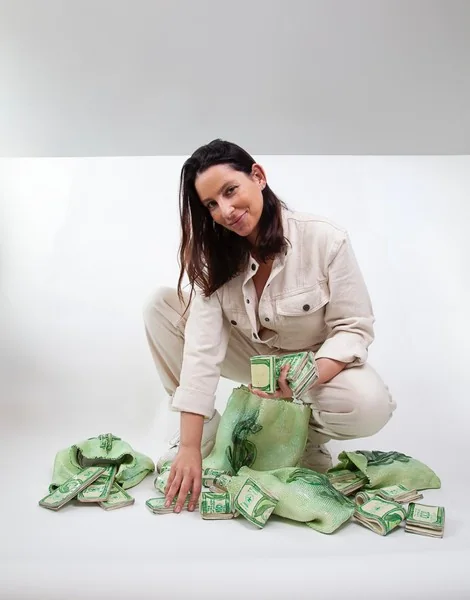
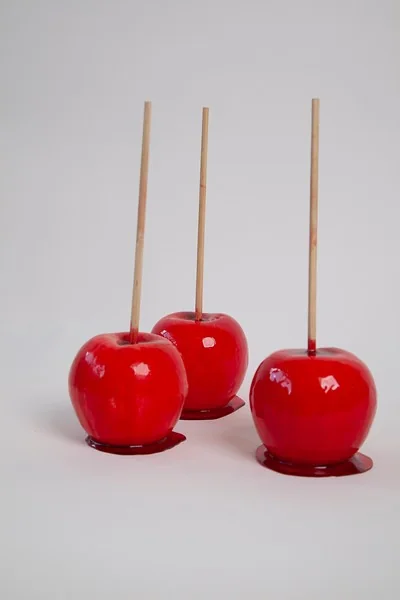
Lihi also sculpts in other materials. Her epoxy work “Caramel Apple” expresses a childhood memory of Independence Day. She has also made ceramic piles of dollars and sacks of money, a playful response to her partner’s request that she start making money from art. Part of this work was acquired for the Bank of Israel collection.
For Lihi, working in the studio with her grandfather over the past two years has been a great gift. “I came to know the soul of a true artist, who has no set working hours, no age and no limit to his love of creating.”