
Frida Kahlo (1907–1954)
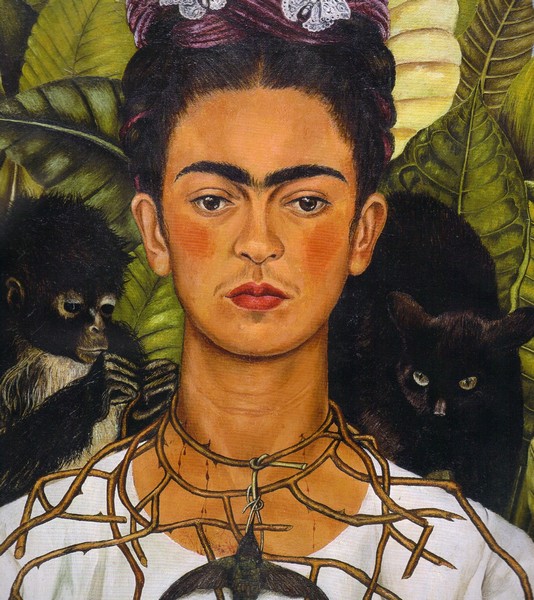
Mexican painter Frida Kahlo is best known for her extraordinary self-portraits. During her lifetime, she created 143 paintings, 55 of which were self-portraits, through which she sought to draw viewers into her fragile inner world and convey the emotional and physical suffering that shaped her life. As a child, she contracted polio, which left her with a lifelong disability. At the age of 18, she was severely injured in a bus accident that confined her to bed for an extended period, during which she discovered painting as a refuge from pain.
Throughout her works, Kahlo portrayed herself wearing flowers, striking earrings, intricate hairstyles, and traditional Mexican embroidered clothing. She deliberately emphasized the contrast between her exotic beauty and her injured, broken body, while challenging conventional ideals of feminine beauty by depicting herself exactly as she was—with a faint mustache and her distinctive unibrow. Many of her paintings also feature animals, particularly monkeys, symbolizing fertility and companionship, and dogs, representing loyalty.
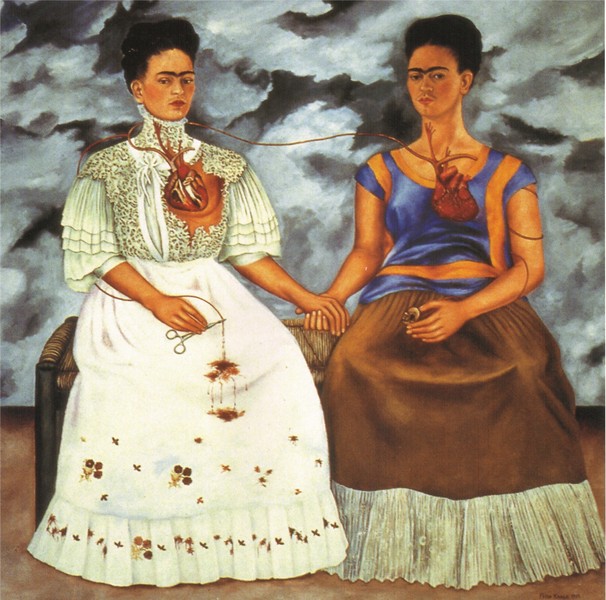
At the age of 22, Kahlo married the renowned muralist Diego Rivera, and together they became the royal couple of Mexican art. A decade later, the two divorced, inspiring Kahlo to paint one of her greatest masterpieces, The Two Fridas, a double self-portrait expressing her profound emotional anguish.
Kahlo, who famously said, “I paint myself because I am so often alone, and because I am the subject I know best,” passed away at the age of 47 after years of physical suffering. Today, her paintings are held in the collections of many of the world’s leading museums, and she is regarded as one of the most fascinating and influential artists in the history of modern art.