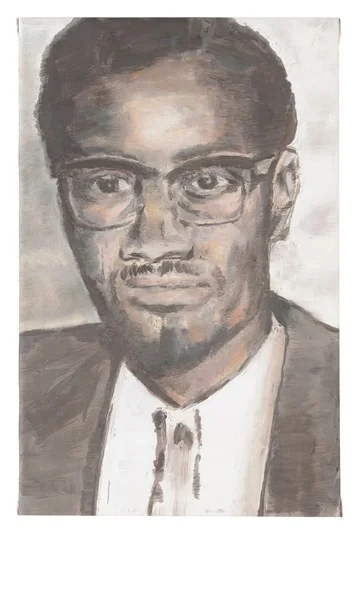
Born in 1958, Belgian artist Luc Tuymans has earned considerable international acclaim and recognition for his pale, greyish figurative paintings, which he says are influenced by ‘the natural light of Belgium’.
He explores people’s relationship with history and confronts their ability to ignore it. His subjects range from major historical events, such as memories of the Second World War and the Holocaust, to banal matters, including everyday objects and portraits of himself, anonymous figures, and historical and public personalities. His works appear blurred, mysterious and hazy, sparse in detail and painted in a soft palette of grey and light brown.
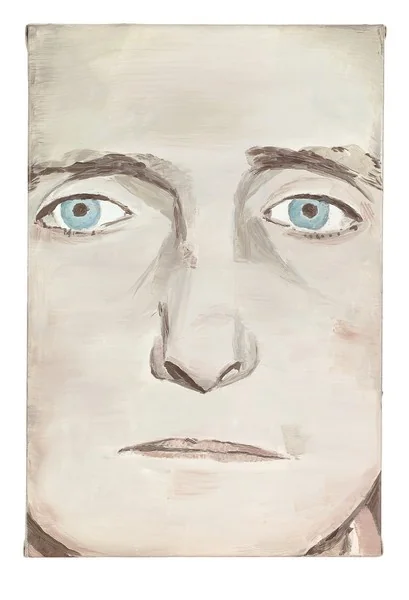
Tuymans paints from photographic images taken from the media, as well as photographs he takes himself. The apparent tranquillity of his images is disrupted when he sometimes adds another layer, giving his paintings titles such as Gas Chamber, The Murderer and Child Abuse. These spark associations in the viewer’s mind, creating a sense of anxiety and impending doom.
In 1992, Tuymans took part in Documenta, the international exhibition of contemporary art in Kassel, Germany, and held a solo exhibition at the Kunsthalle in Berlin, helping establish his reputation in Europe. In 2001, he represented Belgium at the Venice Biennale to considerable acclaim. He has participated in more than 350 group exhibitions and 70 solo exhibitions, and is represented by the renowned David Zwirner gallery.
Tuymans’s paintings are held in the collections of leading museums, including the Centre Pompidou in Paris, Louisiana in Denmark, Tate in London, MoMA and the Guggenheim in New York, Prada in Milan, The Broad in Los Angeles and the Museum of Contemporary Art Chicago.
Bottom line: An artist of history and everyday life.