Ephemeral Artworks
Time-limited art is often innovative, surprising, and highly original. In recent years, an increasing number of creative artists around the world have stepped outside the traditional gallery setting in search of new ways to engage audiences. Rather than painting on conventional canvas and exhibiting their work in museums or galleries, they venture outdoors, transforming temporary natural surfaces—sand, grass, snow, and city pavements—into their artistic medium.
The results are breathtaking, captivating audiences far beyond the usual museum-goers by bringing art directly into public spaces. The only drawback is that these works are fleeting. If visitors do not experience them in time, the artwork disappears, leaving behind only photographs as lasting memories.
Here is a glimpse into unconventional art that exists only for a limited time: a landscape artist decorating California’s beaches, an artist transforming snowy landscapes into vast canvases, an ecological artist creating biodegradable paintings on grass, and street artists producing astonishing three-dimensional pavement drawings.
Giant in Green. Art on Grass
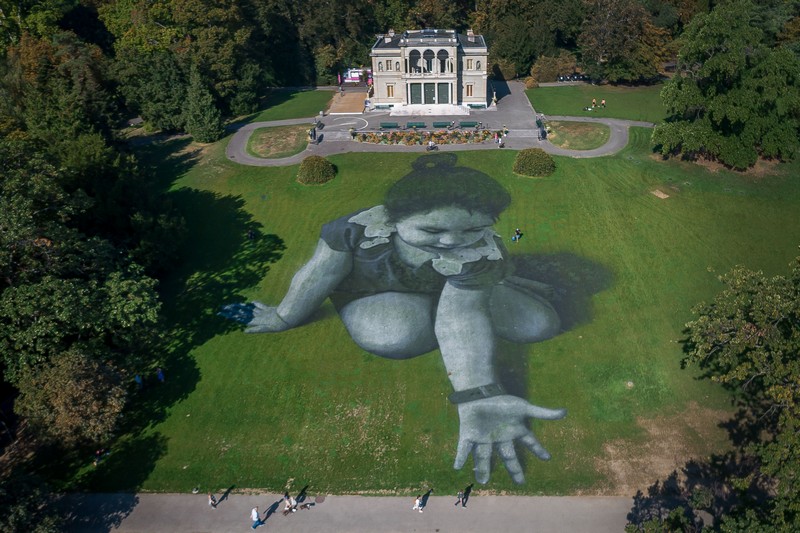
Guillaume Legros, better known as Saype, is an internationally acclaimed artist who has developed a distinctive artistic language through his monumental paintings on grass created with environmentally friendly, biodegradable paints.
Born in France, the 32-year-old self-taught artist now lives and works in Switzerland. He began his artistic journey as a graffiti painter at the age of fourteen and, in 2019, was recognized by Forbes as one of the most influential figures in the art world under the age of thirty. Saype is regarded as one of the pioneers of contemporary land art, creating environmentally conscious works that celebrate nature while conveying powerful messages of empathy, unity, mutual support, and solidarity.
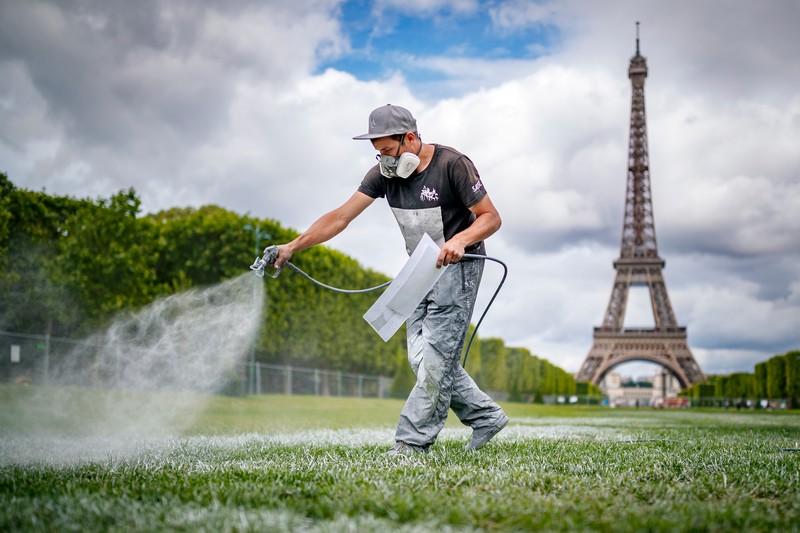
Saype transforms small sketches into enormous landscape paintings using spray techniques directly on grass. The paints are homemade, consisting of chalk, charcoal, flour, linseed oil, water, and natural pigments.
“My goal is to have as little impact on nature as possible,” he explains. “I use only natural materials and biodegradable paints—chalk for the white areas, charcoal for the dark ones, and a milk-protein-based binder. My objective is to touch people’s hearts without harming the environment.”
The immense scale of his works presents unique challenges, while weather conditions often complicate the process. Rain-soaked grass, for example, prevents the paint from adhering properly.
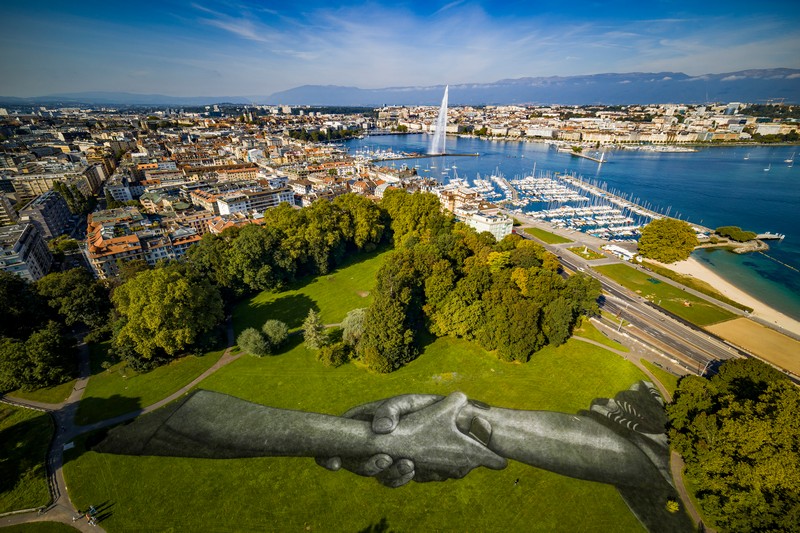
His most ambitious project, Beyond Walls, depicts giant intertwined hands forming a human chain across cities and countries as a response to the physical and psychological walls separating people. The project promotes a universal message of unity, demonstrating that humanity can achieve more together than apart.
The monumental artwork has appeared beneath the Eiffel Tower in Paris, as well as in Berlin, Geneva, Istanbul, Ouagadougou (Burkina Faso), Yamoussoukro (Côte d’Ivoire), and Cape Town.
In 2020, amid the COVID-19 pandemic, Saype created Beyond Crisis in the Swiss Alps, sending a message of hope and optimism during a difficult period for the world.
Pure Beauty. Art on Snow
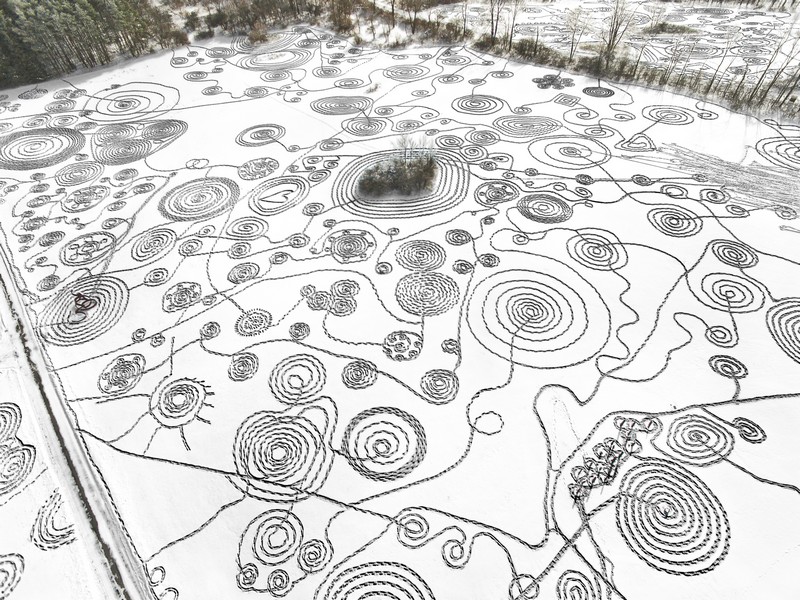
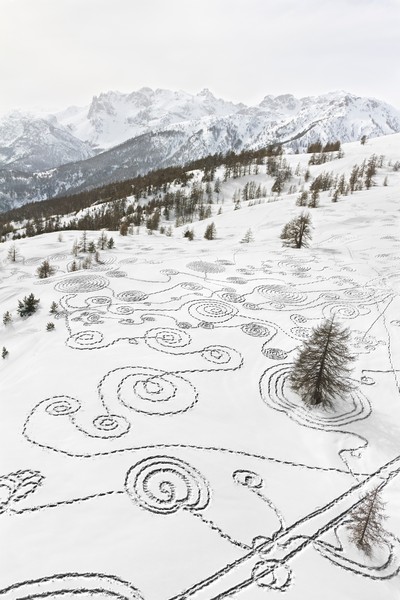
Sonja Hinrichsen, an American artist based in San Francisco, transforms vast snowy landscapes into extraordinary artistic canvases. Her works in Canada, Alaska, Finland, France, and the Colorado mountains are collaborative art events involving volunteers from local communities.
Participants spend hours walking across untouched snow wearing specialized snowshoes, creating intricate geometric and spiral patterns across the frozen landscape. Only from above can the complete composition be fully appreciated.
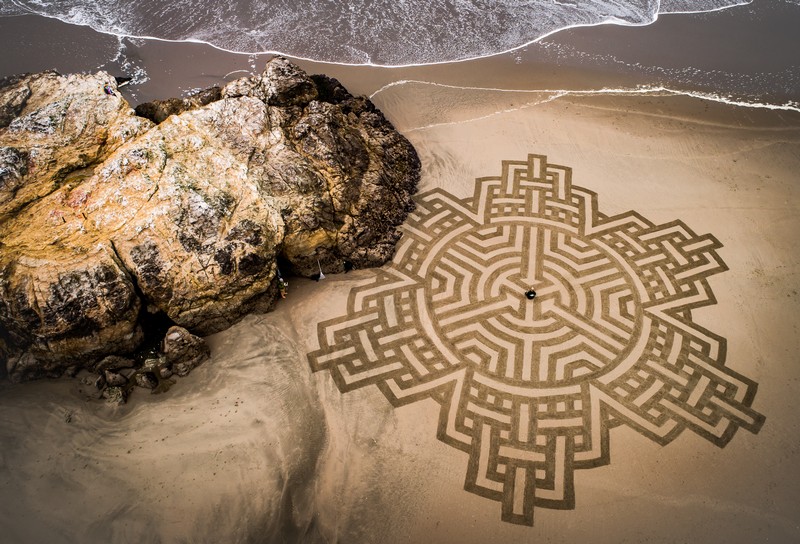
The lifespan of each artwork is unpredictable. Sometimes fresh snowfall covers the design shortly after completion. Throughout the process, Hinrichsen documents the evolving artwork through aerial photography and drone footage, emphasizing the sublime beauty of the natural environment.
“My work reflects concern for the environment,” she says. “Modern society is becoming increasingly disconnected from nature while pursuing a consumer-oriented lifestyle that leaves toxic waste behind. If we want future generations to thrive, we must protect nature and our planet. I deliberately create art that does not remain forever because the world already contains enough permanent objects.”
Washed Away by the Tide. Art on the Beach
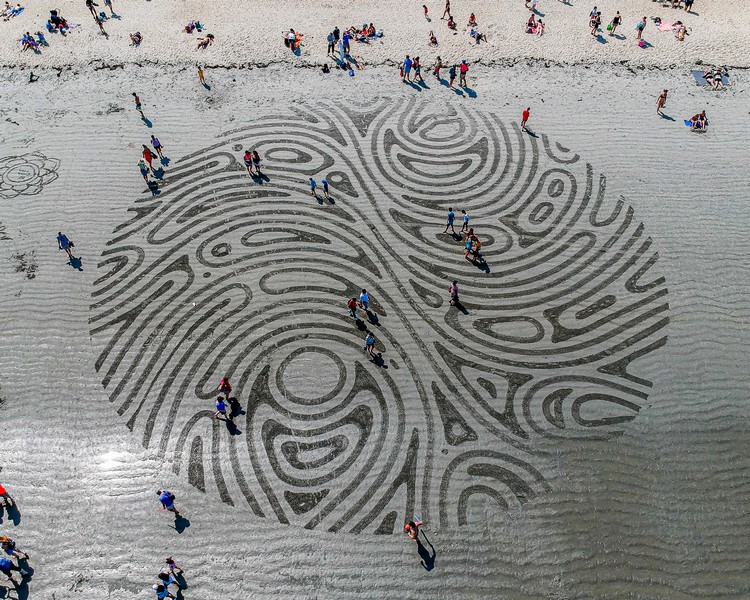
American landscape artist Andres Amador transforms California’s beaches into enormous sand drawings destined to disappear beneath the tides.
Sand offers a soft, flexible medium that is ideal for large-scale artistic expression. Together with a team of volunteers, Amador works during the narrow window between low and high tide. They wait for the lowest tides, often during full moons, before rushing onto the beach armed with rakes to create intricate geometric and abstract compositions across the sand.
The artworks are most impressive when viewed from above through aerial photography rather than from ground level.
According to Amador, “People are fascinated that I create art destined to be washed away, but that’s really the story of our lives. Our lives are temporary, and the tide cannot be stopped. If I can inspire others, I hope to remind them that the journey matters more than the final destination.”
His first sand artwork was created in 2004 at Ocean Beach in San Francisco. Since then, he has decorated beaches across the United States, Mexico, and France’s Channel Islands. Even before the ocean reaches them, many of his creations are gradually erased by wind and the footsteps of beachgoers.
Stepping Into the Picture. 3D Pavement Art
The British studio 3D Joe & Max was founded by street artists Joe Hill and Max Lowry, whose spectacular three-dimensional street paintings gained worldwide recognition. Following Lowry’s unexpected death in 2010, Hill has continued their artistic legacy under the original studio name.
The illusion is created using two-dimensional chalk drawings on pavement. When viewed from the correct perspective, the artwork appears astonishingly three-dimensional, creating dramatic depth and giving the illusion that the image has come to life.
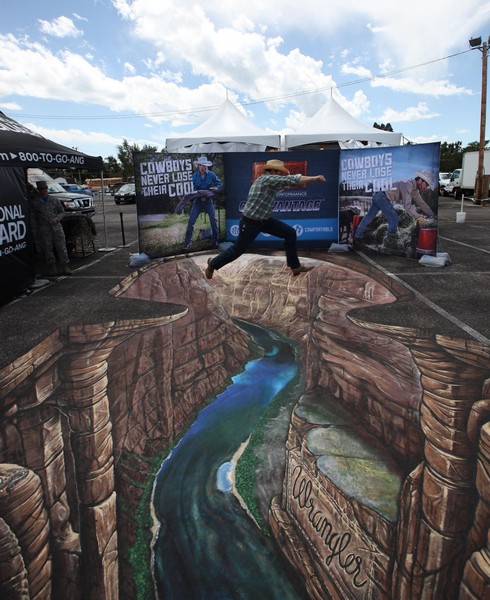
This form of public art naturally encourages interaction. Passersby enjoy stepping into the artwork and posing for photographs as though they have entered the painted world itself.
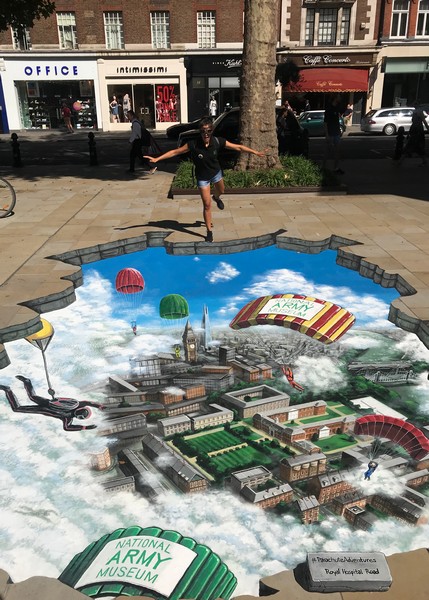
In recent years, 3D pavement art has also become a highly effective advertising medium. Joe & Max have created large-scale promotional installations for major brands including Google, Disney, Coca-Cola, and many others.
In 2011, they produced a street painting in London for sportswear company Reebok that earned a Guinness World Record as the world’s largest pavement artwork, covering approximately 1,160 square meters.
Like all of their creations, however, its lifespan was brief. Rain eventually washed it away, while countless footsteps gradually erased what had once been an extraordinary illusion.