Quinta do Vale Meão, Portugal
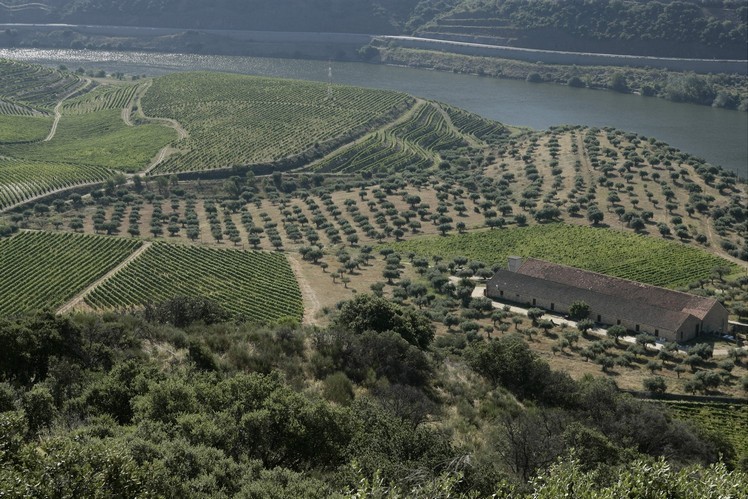
More than 220 hectares (approximately 544 acres) of vineyards spread across slate and granite hillsides, descending toward the Douro River—the lifeblood of Portugal’s legendary Port wines. The vines are planted by hand on carved stone terraces that have shaped the landscape for generations.
Portugal, one of the world’s most romantic wine-producing countries, has preserved many of its ancient traditions, particularly in the northern Douro Valley, home of the famous Port wines. Here, grapes are still trodden by barefoot men and women inside traditional lagares—large granite or concrete fermentation tanks—while an old accordion provides the soundtrack. This is not a performance for tourists but an authentic winemaking practice that has survived modern technology because it remains remarkably effective. Gentle foot treading extracts tannins from the grape skins and stems while enhancing the wine’s deep ruby color.
The vineyards, covering 220 hectares, cling to steep slate and granite slopes overlooking the Douro, often called the “River of Gold.” Every vine is planted by hand, with each hole carved directly into the rocky terrain. The region’s demanding topography requires relentless manual labor throughout the year. Although 17 grape varieties are officially approved for Port production, four dominate the vineyards: Touriga Nacional, Touriga Franca, Touriga Barroca, and Tinta Roriz.
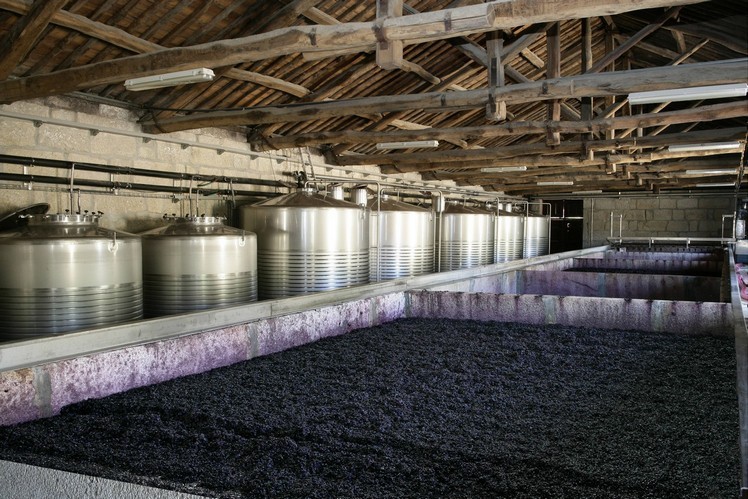
Quinta do Vale Meão’s traditional lagares continue to be used during harvest, preserving a centuries-old method that remains both efficient and respectful of tradition.
The estate, whose history stretches back many decades, was acquired in 1999 by Francisco Xavier de Olazabal, a dedicated winemaker who had worked at the winery since childhood. The winery itself is an elongated granite building with a distinctive red roof, standing proudly amid endless vineyards and visible from afar.
Bottom Line: At Quinta do Vale Meão, the centuries-old tradition of Port wine production is still very much alive.